



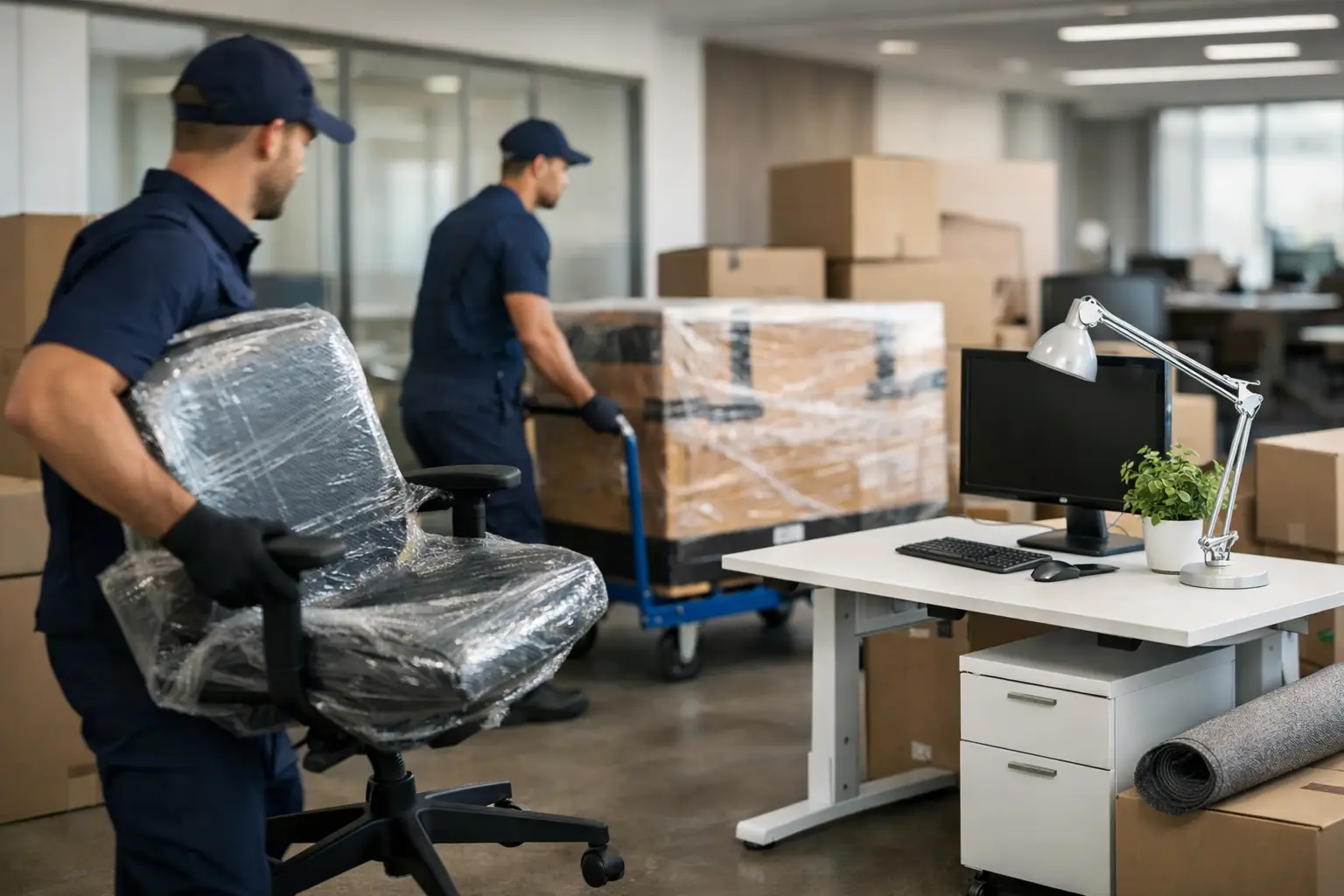
An office move can lose time before the first desk reaches the truck. A blocked loading bay, an unlabelled workstation or a boardroom table that will not fit through the lift can quickly put your team behind schedule. Knowing how to move office furniture properly means planning the space, access, people and equipment well before moving day.
For a small business, the aim is not simply to transport furniture from one address to another. It is to have staff walk into a usable workplace with the right desks, chairs, storage and meeting-room furniture in the right places. That takes a clear plan and careful handling.
Start With a Furniture and Floor Plan
Walk through the current office and list every item that needs to move. Include desks, task chairs, filing cabinets, shelving, reception counters, boardroom tables, whiteboards, kitchen appliances, lockers and loose accessories. Measure larger pieces, especially furniture that may need to travel through narrow doorways, stairwells or lifts.
Then compare that list with the new office floor plan. Mark where each workstation, cabinet and shared item will go. A simple numbered layout is often enough: desk 12 goes to workstation 12, storage unit B goes to the rear wall, and so on. Without this step, movers may place everything in the nearest available space, leaving your staff to spend hours shifting furniture after the move.
Be realistic about what should come with you. An office relocation is a good opportunity to remove damaged chairs, unused cabinets and outdated workstations. Moving unwanted furniture costs time and space in the truck. Arrange disposal, recycling or donation before moving day rather than leaving it for the removal team to sort out on site.
Check Building Access Before You Book
Access is one of the biggest factors in how quickly office furniture can be moved. Confirm the loading bay location, vehicle height limits, lift dimensions, lift booking rules and the path from the truck to your suite. In Melbourne CBD buildings, loading zones and goods lifts often need to be booked in advance, sometimes for a specific time window.
Check whether building management requires certificates of currency, lift protection, induction paperwork or a bond. Get these requirements in writing and provide them early. A removal crew cannot start work if access has not been approved, and waiting for a building manager can turn a straightforward move into an expensive delay.
Also inspect both ends of the move. Look for low ceilings, tight turns, uneven paths, parking restrictions and areas where furniture may need to be carried rather than wheeled. If access is difficult, trained removalists can plan the right crew size, trolley equipment and vehicle before the day begins.
Decide What Needs Dismantling
Not every piece of furniture should be dismantled. Chairs, small tables and standard mobile pedestals are generally safer and faster to move assembled. Large boardroom tables, modular workstations, tall shelving and reception desks may need to come apart to pass through doors, reduce lifting risk or prevent damage.
Dismantling has a trade-off. It makes bulky items easier to handle, but it adds labour and requires organised reassembly at the new site. If furniture is flat-packed or has worn fittings, repeated dismantling can also weaken it. Assess each item individually instead of taking everything apart by default.
For items that are dismantled, bag all screws, bolts, brackets and cable parts separately. Label each bag with the furniture item and destination area. Tape bags securely to the relevant frame where practical, but avoid sticking tape directly to polished timber, fabric or delicate finishes. Take clear photos before dismantling complex desks or storage systems so reassembly is not guesswork.
Protect Furniture, Walls and Floors
Office furniture often has vulnerable edges, glass panels, laminate surfaces and electronic components. Wrap desks, cabinets and tables with moving blankets or padded covers. Use corner protectors for timber and glass, and secure drawers so they cannot slide open while being carried or transported.
Empty filing cabinets before moving them. A cabinet full of files is heavy, unstable and harder to manoeuvre safely. Pack documents into labelled archive boxes, keeping confidential records separate and secure. If a cabinet must be moved with light contents inside, lock it and confirm that the unit is designed for transport that way.
Protect the building as well as the furniture. Lift padding, floor runners and corner guards reduce the chance of scuffs, scratches and disputes with building management. This matters particularly in shared commercial buildings where common areas are closely monitored.
Label for a Fast, Usable Set-Up
Good labelling is what turns an office move into an organised relocation. Give every desk, chair, cabinet and box a destination label that matches the new floor plan. Use colour-coded zones if your office has departments, such as administration, sales, operations and meeting rooms.
Workstations need more than a desk number. Label monitor arms, desk pedestals, keyboard trays and any components that belong together. If staff have assigned seating, add their name or employee number to the label. This prevents a pile of identical desks becoming a time-consuming puzzle at the new office.
Keep a separate moving checklist for high-value or essential items. This may include server cabinets, printers, project files, keys, access cards, safes, artwork and specialised equipment. Photograph valuable items before the move and nominate one person to check them off at collection and delivery.
Keep IT and Furniture Moving Plans Separate, But Coordinated
Furniture movers can safely transport office equipment when it is packed and prepared correctly, but IT disconnection should be handled by your internal IT team or a qualified provider. Computers, monitors, phones, routers and servers need a shutdown, backup and reconnection plan that protects data and reduces downtime.
Ask staff to clear personal items, disconnect approved equipment and pack desk contents before movers arrive. Cables should be labelled at both ends, bundled neatly and packed with their matching workstation where possible. Do not leave loose monitors, external drives or chargers on desks expecting them to be sorted during loading.
The furniture move and IT schedule should work together. There is little benefit in having all desks installed if power, internet and critical systems will not be ready for another week. Prioritise reception, core work areas and meeting spaces so the business can operate while less urgent areas are finished.
Use Safe Lifting and the Right Equipment
Large office furniture can be awkward even when it is not particularly heavy. Desks with return sections, tall cabinets and meeting tables are difficult to balance, and one poor lift can injure a worker or damage a wall. Avoid asking office staff to carry bulky furniture without training, equipment and a clear lifting plan.
Professional removalists use trolleys, furniture dollies, straps, blankets and other handling equipment to move items safely and efficiently. They assess weight, shape and access before lifting, rather than forcing an item through a tight space. This is especially valuable for heavy cabinets, compactus units, large printers and furniture on upper floors.
Do not overload lifts, trolleys or vehicles. Secure furniture in the truck to prevent movement during transit, with heavier pieces positioned appropriately and fragile items protected. Insurance and careful handling matter, but prevention is always better than dealing with a damaged boardroom table or injured team member.
Plan the Move Around Business Operations
The best moving time depends on your business. A weekend or after-hours move may minimise disruption, but it can involve building access restrictions or additional costs. A weekday move can be more practical for access and supplier coordination, provided critical work is covered.
Tell staff exactly what they need to do, when they need to finish packing and where they should report after the move. Nominate a move coordinator who can make decisions on the day, answer questions and confirm furniture placement. Too many people directing the crew creates confusion; one informed contact keeps the job moving.
For businesses relocating in Melbourne, allow extra time for traffic, loading-zone rules and CBD building requirements. A clear quote should account for access, furniture volume, labour, travel and any dismantling or packing required, so there are no surprises once the move is underway.
When to Bring in Office Removalists
A few desks and chairs may be manageable internally, but a full office is usually best handled by an experienced commercial removal team. The value is not only in the truck. It is in planning access, protecting furniture, handling heavy items, loading securely and placing everything according to the new layout.
Blaze Removals can assist with office furniture removals, packing, dismantling and transport for businesses that need a dependable, properly organised move. The right support lets your staff focus on reopening the office rather than carrying cabinets down a stairwell.
A well-run office move is measured by the first working day at the new address. When every workstation is in place, essential equipment is accounted for and your team can get back to work, the planning has done its job.