



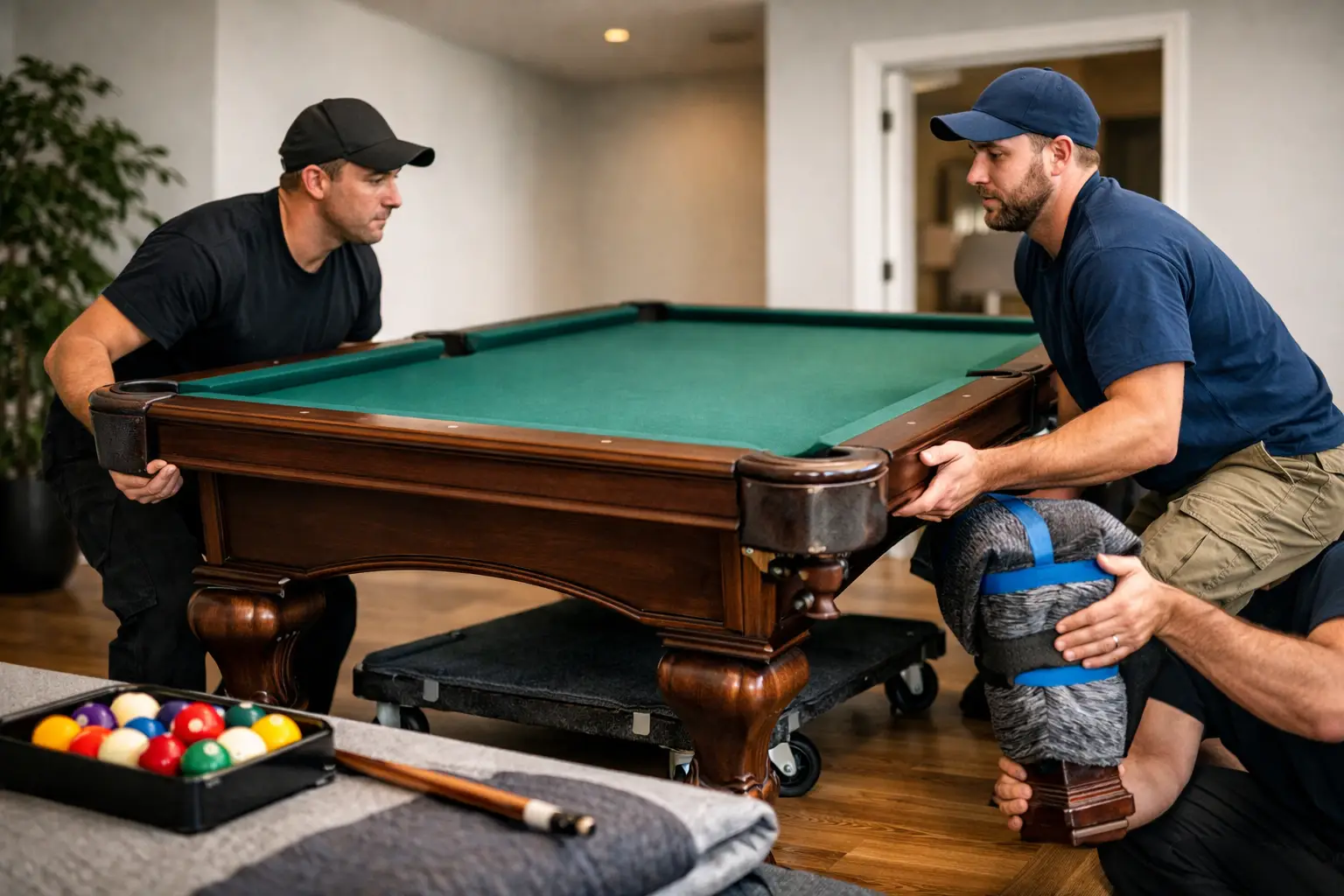
A pool table is not just another heavy piece of furniture. A standard table can weigh anywhere from 250 kg to well over 450 kg, and much of that weight sits in a slate bed that can crack if it is lifted, dropped or twisted. Knowing how to relocate pool tables properly means protecting the table, your property and the people doing the lifting.
The safest approach depends on the table’s size, slate configuration, access at both properties and how far it needs to travel. A compact MDF table on the ground floor is one job. A full-size three-piece slate table coming down a narrow staircase is a specialty move that needs planning, proper equipment and trained handling.
Start by identifying the table you are moving
Before booking a truck or gathering helpers, work out what kind of pool table you have. Look underneath the table for a manufacturer label, then measure the playing surface. Common Australian home sizes include 6 ft, 7 ft, 8 ft and 9 ft, while pub-style tables may be larger and significantly heavier.
The key question is whether it has a slate bed. Slate is common in quality billiard, snooker and pool tables. It provides a flat, stable playing surface, but it also makes the table exceptionally heavy and vulnerable to damage when handled as one unit. Some tables have a single slate piece, while others use three sections. Three-piece slate tables are generally easier to move because the slate can be removed in sections, although each section can still weigh 70 kg or more.
MDF or timber-bed tables are lighter, but they still need careful handling. Their frames can flex, legs can loosen and the cloth can tear if the table is dragged or packed poorly. Never assume a table is light enough for an improvised lift simply because it is smaller.
Measure access before moving day
Most pool table problems begin before anyone touches the table. Measure the narrowest points along the path from the games room to the truck, then from the truck to the new location. Include doorways, hallways, stairwells, lifts, turns, gates and driveway access.
Check ceiling height where the table will be reassembled too. You need enough room to fit the table comfortably and use a cue without striking walls, lights or furniture. As a general rule, allow the cue length plus at least 1.5 metres of clearance around the table. If the room is tight, a shorter cue may help, but it is better to identify that issue before the table is rebuilt.
Take clear photos of difficult access points. A narrow Melbourne terrace hallway, apartment lift booking or stairs with a tight landing can change the equipment, crew size and time required. Accurate information also helps removalists provide a more realistic quote.
Why a pool table should be dismantled
For most slate pool tables, moving the table fully assembled is not safe. The legs and frame are designed to support weight from above, not absorb twisting forces while being carried through doorways or down steps. A sudden shift can damage joints, bend levelling hardware or crack slate.
A proper dismantle usually involves removing the pockets, rails and felt, lifting out the slate, then separating the frame and legs where required. The slate, rails and hardware should be labelled so the table can be reassembled accurately at the other end.
This is not a job for a basic socket set and guesswork. Pool table bolts may be hidden beneath the cloth or rails, and the felt is easy to stretch, mark or tear. If the cloth is in good condition, a professional can often refit it. If it is worn, this may be the practical time to replace it before reassembly.
Keep every part organised
Small parts can hold up the whole installation. Put bolts, screws, shims and pocket hardware into labelled bags, and keep them with the table rather than loose in a moving box. Take photos during dismantling, particularly of rail brackets, leg fittings and any unusual supports beneath the slate.
Do not use tape directly on the felt, polished timber or leather pockets. Wrap components in moving blankets and use protective packing materials between hard surfaces. Slate needs edge protection as well as face protection, because a sharp knock on a corner can cause costly damage.
The right equipment matters
A pool table move requires more than a trolley. Heavy-duty furniture dollies, lifting straps, moving blankets, corner protectors, ratchet straps and a suitable vehicle are standard requirements. Depending on access, the job may also need stair-climbing equipment, a tail lift or additional crew members.
The truck should have enough space to keep slate upright where appropriate, securely braced and away from items that can shift in transit. Never place heavy boxes on top of rails, pockets or wrapped slate. The table components should be loaded so they cannot slide, topple or take the force of sudden braking.
Avoid dragging a pool table across carpet, floorboards or tiles. Dragging can strain the frame, tear flooring and put people at risk. Even lifting one side to slide furniture pads underneath can be unsafe if the table is slate-backed and the load is uneven.
Lifting safety is not optional
A damaged table is frustrating. A back injury is far worse. Pool tables are awkward loads with a high centre of gravity, and slate is unforgiving when it shifts unexpectedly. Do not rely on friends who have not handled heavy furniture before, especially for stairs, steep driveways or confined spaces.
If you are handling a lighter non-slate table yourself, clear the route first and assign one person to direct the lift. Wear enclosed shoes with grip, keep hands clear of pinch points and communicate before every lift, stop and turn. Do not attempt to catch a falling slate section. Step clear and protect people first.
For slate tables, professional handling is usually the sensible choice. The cost of a specialist service can be far less than replacing cracked slate, repairing damaged walls or dealing with an injury.
Transport, reassembly and levelling
Getting the table into the new house is only half the job. A pool table must be rebuilt square and level, otherwise balls will drift and the game will not play correctly. Reassembly starts with positioning the frame in its final location. Once slate is installed, moving the table again is difficult and can undo the levelling work.
A professional will level the frame, position the slate, align joins and use shims where necessary before refitting the cloth and rails. On three-piece slate tables, the joins may need filling and smoothing so they do not affect play. This work requires patience, accurate measurements and the right levelling tools.
It is normal for a table to need a final level check after it has settled, particularly in older homes with uneven floors. Keep the room’s temperature and humidity reasonably stable where possible. Major moisture changes can affect timber components and cloth tension over time.
When to book professional pool table movers
Hiring trained movers is strongly recommended when the table has slate, must travel upstairs or downstairs, needs to pass through restricted access, or is being moved as part of a larger house or office relocation. It is also the best option when you want dismantling, transport, reassembly and levelling handled as one coordinated service.
Ask what is included before you book. A clear service should cover the number of movers, required equipment, protection for the table and property, transport arrangements and whether reassembly and levelling are included. Insurance coverage and an accurate access assessment matter just as much as the truck itself.
For moves across Melbourne, Blaze Removals can coordinate specialist pool table handling alongside your broader removal, so you are not trying to manage a delicate dismantle between packing boxes and handing back keys.
A quick decision check before you move it yourself
A DIY move may be possible for a small, non-slate table with flat access, a short travel distance and capable helpers. Even then, it is worth weighing the saving against the time, equipment and risk involved.
Book professionals if any of the following apply:
- The table has one-piece or three-piece slate.
- There are stairs, tight corners, lift restrictions or difficult parking.
- The table needs felt removal, reassembly or precise levelling.
- You are moving a commercial, coin-operated or antique table.
- You do not have enough experienced people and proper moving equipment.
A pool table is built for years of hard play, but it is not built to be manhandled through a move. Plan the access, protect every component and choose experienced help when the weight or complexity calls for it. That gives your table the best chance of arriving ready for the first break at its new home.