


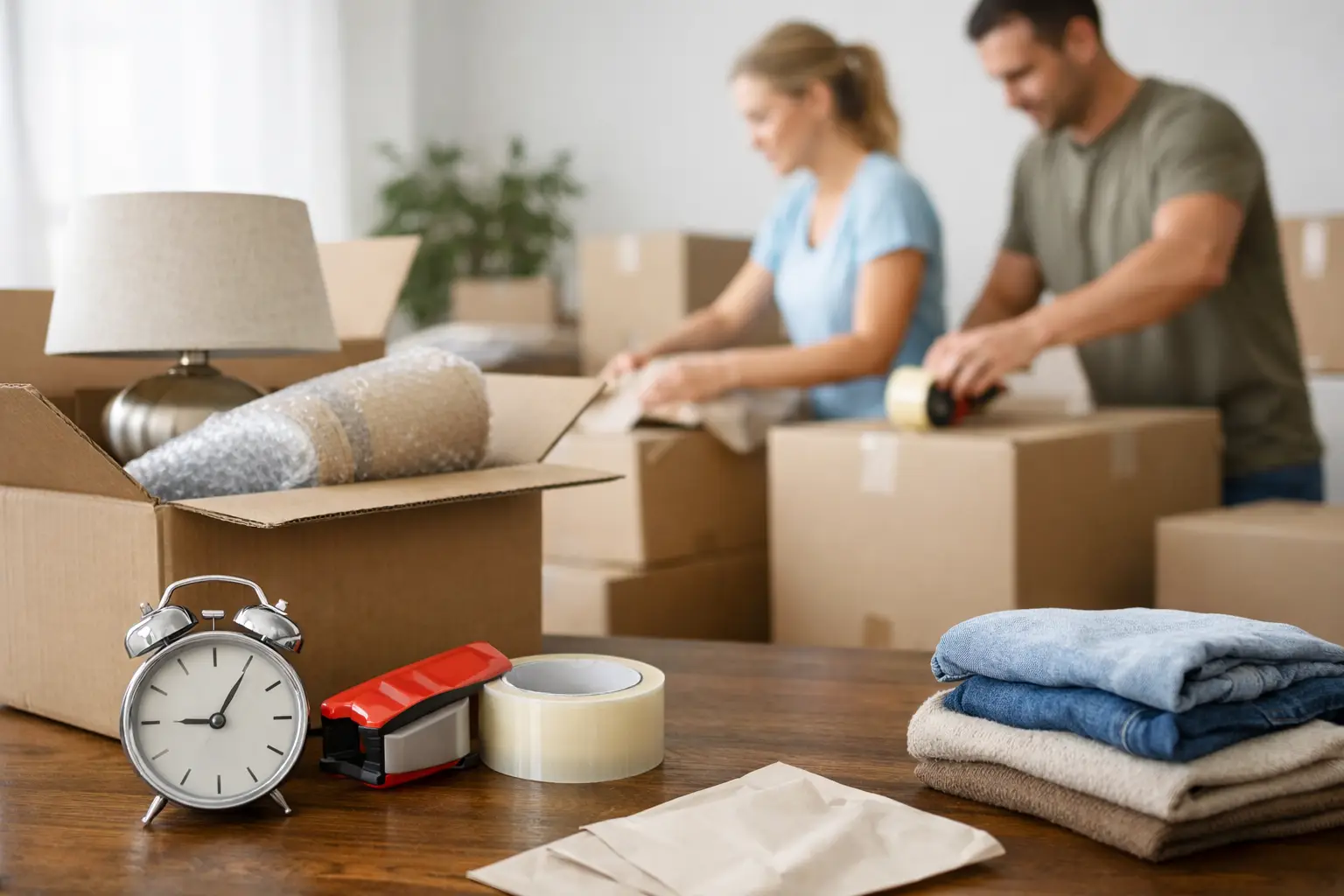
That half-packed kitchen bench is usually where moving plans start to slip. The question, “how long does packing take”, has no single answer, but most moves take longer than people expect because packing is not just putting items in boxes. It involves sorting, wrapping, labelling, dismantling furniture and making decisions about what is worth taking.
A realistic packing plan gives you enough time to protect your belongings without turning the final night before moving day into a rushed mess. Whether you are moving a flat, family home or small office, the size of the job matters – but so does how prepared you are.
How long does packing take for a house move?
For a small flat or one-bedroom home, allow four to eight hours if you are organised and packing alone. A two-bedroom home commonly takes one full day to two days. For a three-bedroom family home, allow two to four days, while larger homes can take a week or more when packed around work, children and everyday commitments.
Those estimates assume you are packing carefully, not simply filling boxes at speed. Fragile glassware, artwork, electronics, books, clothes, garage tools and outdoor equipment all need different handling. A house may look tidy, yet cupboards, sheds and storage spaces often hold far more than expected.
Professional packing teams work faster because they arrive with the materials, systems and labour to handle the job in one concentrated session. As a broad guide, a small flat may take a team two to three hours to pack, a two-bedroom home around three to five hours, and a three-bedroom home five to eight hours. Larger properties, homes with extensive storage or specialty items will need longer.
These are packing times only. They do not include loading the truck, travel, unloading, unpacking or reassembling furniture at the new address.
The rooms that take the longest
Kitchens regularly take the most time per square metre. There are dozens of fragile items, odd-shaped appliances, pantry supplies and drawers full of small items. Wrapping plates and glassware properly is slower than packing linen, but it is also what prevents damage in transit.
Garages, sheds and wardrobes are the other common time traps. A garage can contain years of tools, paint, sporting gear and items that cannot be transported in the same way as household furniture. Wardrobes may be quick if clothing goes directly into purpose-made cartons, but sorting unwanted clothing can quickly add hours.
Children’s rooms also take longer than expected, especially when toys, books, craft supplies and small furniture need to be sorted. Pack these rooms early if possible. It keeps daily disruption low and stops last-minute decisions from holding up the move.
What changes the packing timeline?
The number of bedrooms gives a useful starting point, but it is not the full picture. Two homes of the same size can have very different packing requirements.
The biggest factor is the volume of belongings. A lightly furnished two-bedroom apartment may be packed in a day. A two-bedroom home occupied by a family for ten years, with a full garage and overflowing cupboards, may take several days.
Access also matters. Packing on the third floor with limited lift access is not necessarily slower while boxes are still inside the home, but it can affect how you stage packed cartons and how efficiently moving day runs. Tight hallways, stairs, poor parking and long carries from the front door all need to be considered when booking removalists.
Specialty items need additional care and time. Pianos, pool tables, large mirrors, antiques, artwork and bulky furniture should never be treated as standard cartons. They may need custom wrapping, dismantling, specialist lifting equipment or a separate transport plan.
Your decision-making speed has an effect too. If every item prompts a debate about whether to keep, donate, sell or throw it out, packing will slow down. Decluttering is worthwhile, but it should be scheduled before serious packing begins rather than left until moving week.
A practical packing schedule that works
For most household moves, start packing non-essential items two to three weeks before the moving date. This is not overplanning. It gives you room to handle work, family commitments and unexpected delays without compromising the condition of your belongings.
Start with rooms and items you use least: spare rooms, bookshelves, decorations, seasonal clothing, spare linen and stored items. Leave everyday kitchen basics, school materials, work equipment and toiletries until the final few days.
One focused room at a time is more effective than opening boxes throughout the house. Finish, label and close each carton before moving to the next area. Half-filled boxes scattered through multiple rooms create clutter and make it harder to see what still needs doing.
A simple label should state the destination room and a short description of the contents, such as “Kitchen – glassware” or “Main bedroom – bedside drawers”. Mark fragile cartons clearly and keep heavy items in smaller boxes. A large carton full of books is difficult to lift safely and more likely to fail at the bottom.
Pack a separate essentials box or bag for the first night. Include chargers, medications, toiletries, a change of clothes, important documents, basic kitchen supplies and anything children or pets will need straight away. It will not reduce the total packing time, but it prevents you from searching through twenty cartons after a long move.
How to reduce how long packing takes
The quickest safe approach is to prepare before the boxes arrive. Clear a working area, arrange quality cartons and tape, and decide where packed boxes will be stacked. Using weak, mismatched boxes may seem cheaper, but it often creates extra work and increases the risk of damage.
Avoid packing rubbish, expired pantry items or things you know you will not use at the new property. Moving fewer items reduces packing time, loading time and the space required in the truck. For larger clean-outs, deal with donations and rubbish removal before packing begins.
Do not over-wrap durable items, but do not cut corners with fragile belongings. Plates should be wrapped and packed upright, glassware should be individually protected, and empty spaces in cartons should be filled so contents cannot shift. The trade-off is simple: saving ten minutes while packing can cost far more if an item breaks during transport.
If time is tight, professional packing is often the sensible option. It is particularly useful for families, people moving at short notice, office relocations and homes with fragile or high-value items. A trained team can pack systematically, supply suitable materials and prepare furniture for transport while you manage keys, utilities, cleaning and the other jobs that come with relocating.
Packing time for an office move
Office packing should start earlier than a home move because business interruption has a direct cost. A small office with five to ten staff may need one to two days of preparation, while larger workplaces need a staged plan over several weeks.
Desks, computers, monitors, files, kitchen supplies, meeting-room equipment and personal staff items all need to be labelled by location or employee. Sensitive documents and IT equipment require clear handling instructions. Simply putting everything into shared boxes can make the new office difficult to set up and delay the return to normal operations.
Where possible, nominate one person to coordinate labels, access, floor plans and final checks. This reduces mixed messages and gives removalists a clear point of contact on moving day.
When to book packing support
Book early if your move falls on a weekend, at the end of a lease, during school holidays or around a busy period such as Christmas. Packing support is most valuable when it is planned as part of the move, not added after boxes have started piling up.
For Melbourne households and businesses, Blaze Removals can assist with packing, furniture dismantling, transport and unpacking, including careful handling for specialty items. A clear inventory and honest description of access, stairs and large belongings helps create a more accurate plan from the start.
Packing takes as long as the belongings and the circumstances require. Give yourself a realistic window, pack with a system and get help where it saves stress or protects what matters. Moving day is easier when the last box is already sealed, labelled and ready to go.