


A cedar wardrobe with a century of history is not just another item for the truck. Antique furniture relocation requires a different level of planning because age, construction methods and original finishes can make a piece vulnerable in ways modern furniture is not. One loose door, a sudden lift from the wrong point or an unprotected edge can leave permanent damage.
For households moving across Melbourne, the safest approach is simple: assess each piece properly, prepare it for transport, and use trained removalists who understand that careful handling is part of the job, not an optional extra.
Why antique furniture needs specialist handling
Antique furniture was often made from solid timber, fine veneers, hand-cut joints and materials that change with age. That craftsmanship is part of its appeal, but it also means the furniture may not react well to the normal pressure of a move.
A modern flat-pack bookcase can usually be dismantled and rebuilt without much concern. An antique chest of drawers may have a weakened drawer runner, a delicate brass escutcheon or a veneer that has lifted slightly over time. A table can look sturdy while having old repairs or a loose joint beneath the surface. These issues are not always obvious until the item is lifted, tilted or placed under load.
The biggest risks are not limited to dropping an item. Scratches from abrasive blankets, moisture, heat, poorly secured loads and repeated vibration on the road can all affect the condition of old timber and finishes. This is why a cheap, rushed move can become expensive very quickly.
Start with a condition check before packing
Before anyone starts wrapping or lifting, inspect every antique piece in good light. Photograph the front, back, sides, top, legs, handles and any existing marks. Take close-up photos of cracks, chips, loose veneer, worn polish or previous repairs.
This record is useful for your own peace of mind and helps the removal team understand which areas need extra care. It also prevents confusion after the move when an old mark is noticed for the first time.
Check whether drawers, doors, shelves, mirrors and decorative pieces are secure. Empty all drawers unless a removalist has specifically advised otherwise. Heavy contents add stress to old runners and can cause drawers to slide open during transport. Remove loose shelves, glass panels and detachable hardware where possible, then pack them separately and label them clearly.
If you have a high-value piece, an item with documented provenance, or furniture that has visible structural problems, seek advice from a furniture conservator before moving day. A removalist can transport the piece safely, but a conservator is the right person to advise on fragile repairs, restoration needs or special climate requirements.
Packing antiques for transport
Good packing is about more than putting a blanket around a cabinet. The aim is to prevent movement, rubbing and pressure on vulnerable areas from the moment the furniture leaves the room until it is placed in its new position.
Protect surfaces without trapping moisture
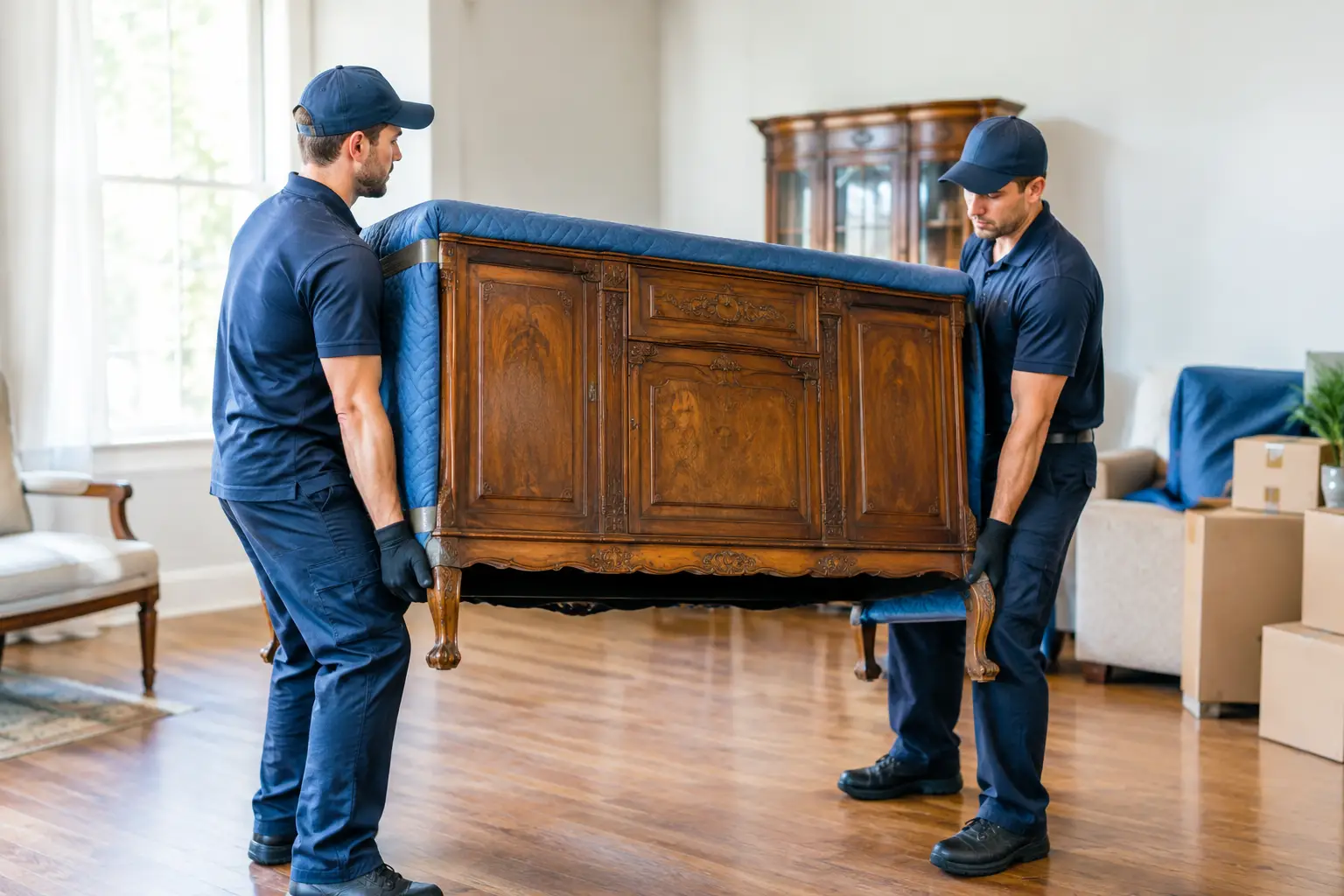
Clean, padded removal blankets are commonly used as the first protective layer. They should cover exposed timber, corners and decorative details without being pulled tight across fragile carving or hardware. The blanket needs to be secured so it stays in place, but straps should never be tightened directly against an antique finish.
For polished timber, painted surfaces and veneer, the wrong material can cause problems. Plastic wrap placed directly on certain finishes can trap moisture or react with the surface, particularly during a long move or warm weather. A protective barrier between the furniture and any outer wrap is the safer option.
Secure glass, mirrors and removable parts separately
Glass-front cabinets, cheval mirrors and framed antique mirrors need individual protection. Glass should be padded, edge-protected and carried upright where appropriate. Do not rely on tape directly on old glass or timber frames, as removing it can damage aged finishes.
Table leaves, marble tops, finials, handles and detachable legs should be removed only when it is safe to do so. Keep screws and fittings in clearly labelled bags, then attach those bags to a protected part of the furniture or place them in a dedicated essentials carton. Small original fittings are easy to lose and difficult to replace.
Avoid unnecessary dismantling
Not every antique should be taken apart. In fact, dismantling can create more risk if old screws are seized, joints have weakened, or the piece was never designed for regular disassembly. A trained team will assess whether it is safer to move the furniture whole, remove only selected components, or use specialist equipment to manage access.
The lift matters as much as the packing
Antique furniture should be lifted from its strongest structural points, not dragged by a leg, pulled by a handle or carried by a decorative rail. A wardrobe may need to be supported from its base. A dining table may require a two-person lift beneath the frame, rather than pressure on the top or apron.
Access needs to be checked before moving day. Measure narrow doorways, stairwells, lifts and tight turns, especially in older homes and inner-city apartments. In Melbourne CBD buildings, lift bookings, loading zones and building management requirements can affect how the move is planned. Sorting these details early avoids a piece being held awkwardly in a hallway while a new plan is made.
Where access is difficult, removalists may use furniture dollies, lifting straps, stair equipment or extra crew members. The right method depends on the item, its weight, the property layout and how fragile the construction is. More hands are not always better if the team is not coordinated. What matters is controlled handling with a clear path from room to vehicle.
Loading and transport: keeping antiques stable on the road
Once in the truck, antiques should be positioned so they cannot shift, rub against other items or take the weight of heavier furniture. They should not be packed underneath mattresses, cartons or appliances, even if there appears to be room.
A quality removal truck setup uses padding, tie rails and load restraints to keep furniture secure. The piece should be loaded upright or in the position recommended for its construction. Mirrors, marble and delicate cabinets often need dedicated placement rather than being squeezed into the last gap in the load.
For interstate moves, the planning is even more critical. Longer travel times mean more vibration, more handling points and greater exposure to changes in temperature. If your antiques are travelling with the rest of a household load, ask how they will be packed, restrained and identified. Fixed-price interstate quotes should clearly describe the service scope so you know whether packing, dismantling and specialist handling are included.
Insurance and valuation: know what protection applies
Insurance is a practical part of antique furniture relocation, but it should not be treated as a substitute for proper packing and handling. Ask the removalist what cover applies, what exclusions may exist and whether you need to declare high-value items before the move.
The value of an antique can be more than its purchase price. Sentimental value cannot be insured, while market value may depend on age, condition, maker, provenance and restoration history. If an item is particularly valuable, keep any valuation documents, receipts and photographs together before moving day. It may also be worth checking whether your home and contents policy provides cover while goods are in transit.
Clear information protects everyone. A professional removalist should be willing to explain the service, handling plan and insurance arrangements without vague promises.
What to tell your removalists before booking
Give accurate details when requesting a quote. Mention the number of antique pieces, approximate dimensions, weight if known, fragile materials, stairs, difficult access and whether the furniture needs to be moved between suburbs or across state lines.
It also helps to flag any unusual items, such as a grandparent clock, a marble-topped sideboard, a display cabinet with curved glass or a large antique mirror. These details allow the crew, truck size and protective materials to be organised properly rather than improvised on moving day.
At Blaze Removals, specialty-item handling can be planned alongside your house move, packing service or interstate relocation. That means your antiques do not need to be treated as an afterthought among everyday cartons and furniture.
A calmer move starts with a clear plan
Do not leave antique items for the final few minutes of packing. Set them aside early, document their condition and make sure the removal team knows exactly what requires special care. If a piece is too fragile to travel safely without attention, arrange that advice before the truck arrives.
The best result is not simply getting an antique to the new address. It is opening the protective covering, seeing the same finish, joinery and character you trusted the team with, and being able to enjoy it in its next home straight away.