



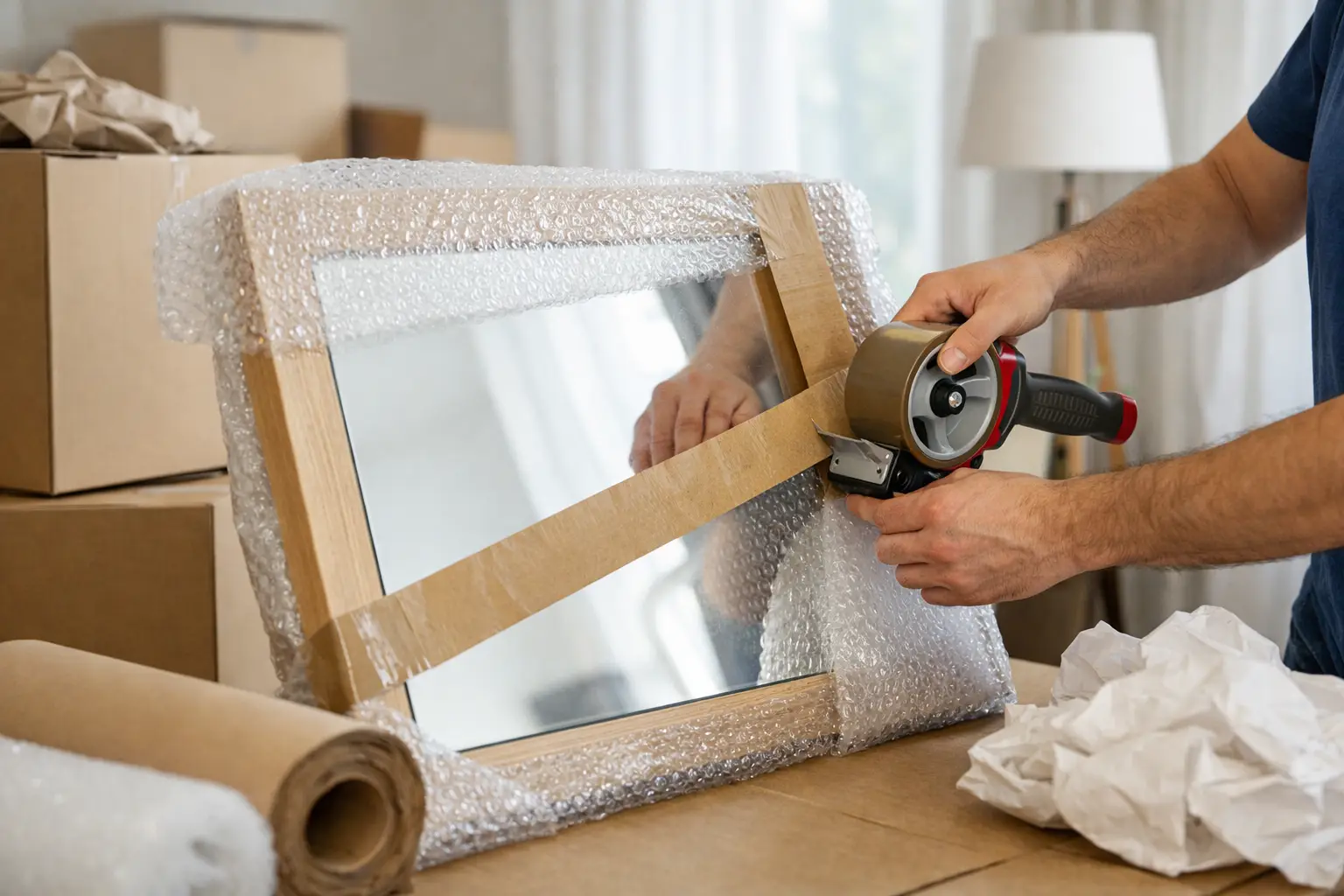
A mirror can look perfectly secure at the start of a move, then crack from one sharp bump in the truck. Knowing how to pack mirrors safely means protecting the glass, the frame and the corners before it leaves the wall. A few extra minutes of proper packing is far cheaper than replacing a damaged mirror after moving day.
Start by assessing the mirror
Not every mirror needs the same packing method. A small bathroom mirror with a thin frame can usually travel in a well-padded moving carton. A large wall mirror, antique frame or full-length dressing mirror needs stronger protection and should be handled as a separate fragile item.
Check for existing chips, loose glass, cracks in the frame or backing that has started to lift. Take a quick photo before packing, particularly for valuable or sentimental pieces. If the mirror is already cracked, do not rely on tape to make it safe to carry. Wear enclosed shoes and gloves, wrap it carefully, and tell whoever is loading it that the glass is damaged.
Remove any wall hooks, loose fittings or detachable decorative pieces. Clean off dust and moisture, then allow the surface to dry completely. Packing a damp mirror can leave marks on the glass or damage timber frames during a long move.
Materials you need to pack mirrors safely
Use purpose-made packing supplies where possible. Thin cardboard, old towels and loose newspaper may seem convenient, but they do not provide reliable corner or impact protection in a loaded removal truck.
For most mirrors, gather these materials:
- Painter’s tape or low-tack masking tape
- Packing paper or clean butcher’s paper
- Bubble wrap
- Cardboard corner protectors
- Moving blankets or furniture pads
- Strong packing tape
- A mirror carton or two flat cardboard sheets
- A permanent marker labelled FRAGILE and THIS SIDE UP
Avoid applying standard clear packing tape directly to a painted, gilded or delicate frame. It can pull away the finish when removed. Painter’s tape is the safer option, but test a small hidden area first if the mirror is old or has a specialty finish.
Tape the glass for extra support
For a framed mirror in good condition, place strips of low-tack tape across the glass in a large X. For bigger mirrors, add a horizontal and vertical strip to create a star or grid pattern. This does not stop the mirror from breaking, but it can help keep pieces together if the glass is hit.
Do not press tape hard into the edges of an old mirror. Older glass and backing can be fragile, and forcing tape into weak areas may cause more damage. If you are concerned about the finish or adhesive marks, skip this step and use extra cardboard protection instead.
How to pack mirrors safely, step by step
Lay a clean moving blanket or thick towel on a flat surface. Place the mirror face-up only while you are wrapping it. Keep pets, children and clutter away from the packing area so nobody steps on a corner or knocks the glass.
First, cover the front of the mirror with packing paper. Use several sheets and fold the paper over the edges, but do not tape paper directly to the frame. The paper protects the glass from scratches and stops bubble wrap texture from marking the surface.
Next, fit cardboard corner protectors over all four corners. Corners take the hardest knocks during a move, especially when a mirror is carried through doorways, down stairwells or past furniture. If you do not have purpose-made protectors, fold thick cardboard into padded L-shapes and secure it around each corner with tape.
Wrap the mirror in bubble wrap with the bubbles facing outward. This creates a smoother layer against the glass and gives the outside better shock absorption. Use enough wrap to cover the front, back and sides, then tape the bubble wrap to itself rather than around the frame wherever you can.
For anything larger than a small mirror, create a cardboard sandwich. Place one flat cardboard sheet on the front and another on the back, extending beyond the edges where possible. Tape the two sheets together around the outside. The aim is to make a rigid protective shell without putting pressure directly on the glass.
Finish with a moving blanket or furniture pad around the entire item. Secure it with packing tape, stretch wrap or straps around the padding, never tightly across bare glass. Clearly write FRAGILE, MIRROR and THIS SIDE UP on both sides. Clear labels give every person handling the item the right instruction before it reaches the truck.
Use a mirror box for the best fit
A telescopic mirror box is a practical choice for standard framed mirrors, artwork and glass panels. It uses two overlapping carton sections that can be adjusted to the size of the item. Fill any gaps with crushed packing paper so the mirror cannot slide inside.
The box should be snug, not forced shut. If you have to bend the cardboard hard around the frame, use larger cartons or the cardboard-sandwich method instead. Pressure points can crack glass before the mirror is even loaded.
Carrying large and heavy mirrors
Large mirrors are awkward because the weight is spread across a broad, fragile surface. Two people should carry any mirror that is heavy, oversized or difficult to hold securely. Lift from the lower sides of the frame, keep it upright, and communicate before turning corners or going through narrow spaces.
Never carry a mirror flat like a tray. Glass can flex under its own weight, particularly in large frameless designs. Keep it vertical and avoid gripping it by the top edge, hanging wire or decorative frame sections.
Measure tight hallways, lifts and doorways before moving day if the mirror is particularly large. Removing a door from its hinges may be safer than trying to force a bulky mirror through a narrow opening. It depends on the item and the access, but rushing a difficult carry is where most chips and broken frames happen.
Load mirrors upright in the truck
The safest position for a packed mirror is upright on its long edge, secured against a flat, stable surface in the truck. Place moving blankets between the mirror and nearby furniture, then use tie-down straps to stop it shifting. The straps should hold the padded package in place without crushing it.
Do not lay mirrors flat on the truck floor or stack cartons on top of them. Even if the road is smooth, bumps, braking and weight from other items can put uneven pressure on the glass. Avoid leaning a mirror loosely against a mattress, sofa or appliance as these items can move during transport.
Keep mirrors away from loose tools, metal bed frames and furniture legs. A single unsecured item can become a serious hazard when the truck turns or stops. For interstate moves, where the mirror will spend longer on the road and may be handled more than once, use a rigid box, extra padding and firm load restraint.
Common packing mistakes to avoid
The most common mistake is assuming bubble wrap alone is enough. Bubble wrap protects against minor knocks, but it does not stop a large mirror from flexing or a corner from taking a direct hit. It needs support from cardboard, corner protection and careful loading.
Another mistake is using household blankets without securing them. A blanket can slide off while the item is carried, leaving glass exposed at the worst moment. Tape or wrap the padding firmly around the item, while keeping adhesive off sensitive surfaces.
Finally, do not leave a mirror until the last load. It deserves a clear path, space in the truck and time to secure it properly. When a move is running late, fragile pieces are often rushed – and that is when preventable damage occurs.
For large, antique or especially valuable mirrors, professional packing and transport can remove the guesswork. Blaze Removals can help protect fragile items with the right materials, trained handling and secure loading, so your mirror arrives ready for its new home rather than a replacement claim.