



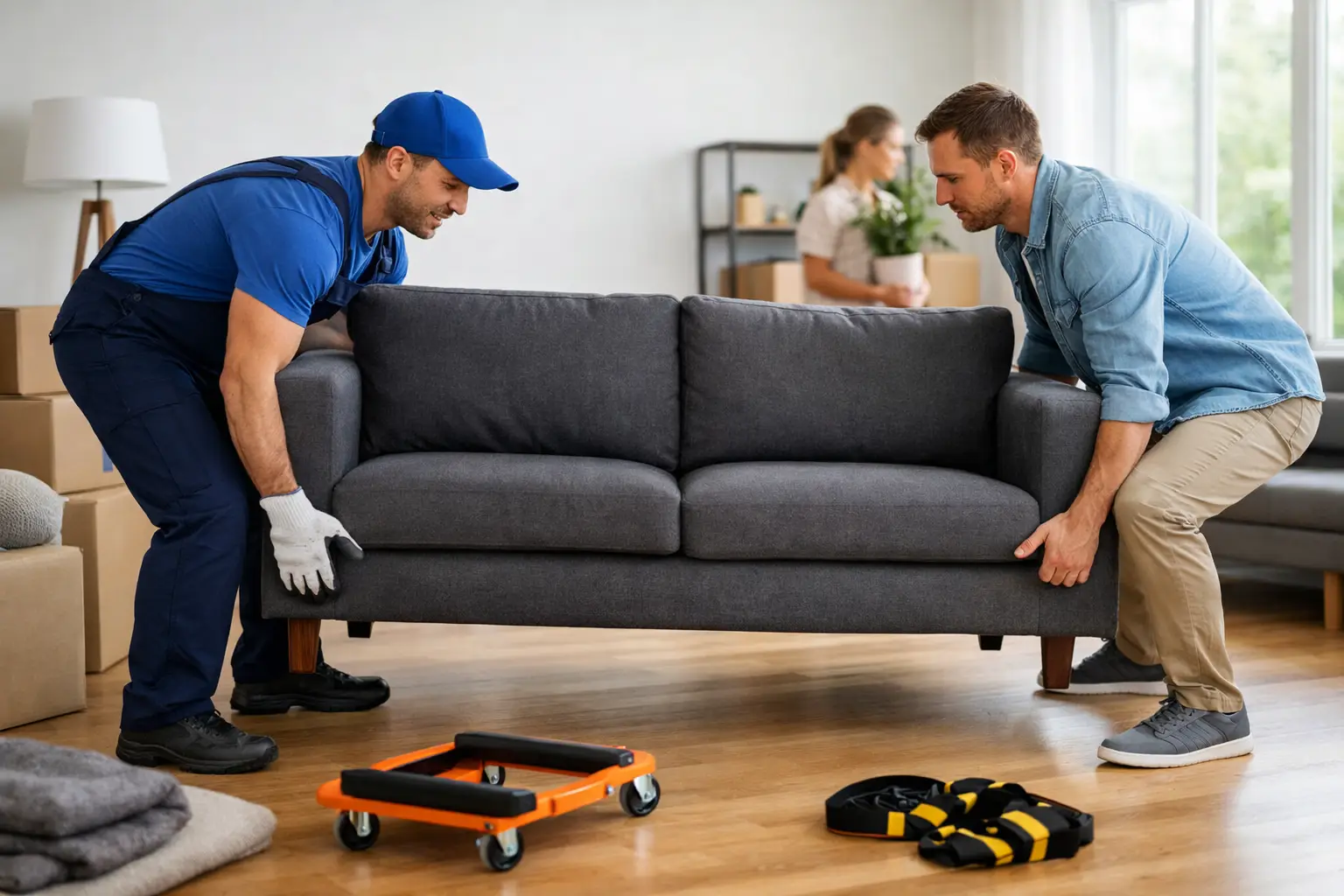
A solid timber buffet, oversized couch or packed filing cabinet can turn a simple move into a costly injury or a damaged wall in seconds. This guide to moving heavy furniture focuses on the decisions that make the work safer: measuring first, using the right equipment, protecting your home and knowing when the item is beyond a DIY lift.
Start with the path, not the furniture
Before anyone puts hands on a lounge or wardrobe, walk the full route from its current position to the vehicle. Measure doorways, hallways, stair landings and lift openings. Check for low light fittings, loose rugs, tight corners, wet surfaces and uneven paths outside.
This step avoids the classic problem of getting a heavy item halfway through a doorway before discovering it will not turn. Remove doors from hinges if a few extra centimetres will make the difference, but only if you can reinstall them safely. For apartment moves, reserve the lift where required and confirm loading dock access, parking restrictions and the distance from the building entrance to the truck.
Also clear the route properly. Move pot plants, shoes, side tables and children’s toys out of the way. Keep pets in a separate room. Heavy furniture needs a clear, predictable path, not a last-minute obstacle course.
Decide whether the piece should be dismantled
Many large items are safer to move in sections. Bed frames, modular sofas, dining tables, wardrobes and entertainment units often come apart with basic tools. Take photos before dismantling, place screws and brackets in labelled bags, and tape each bag to the relevant piece where practical.
Remove drawers, shelves and detachable legs to reduce weight and prevent them sliding open in transit. Glass panels, marble tops and mirrors should be handled separately and protected with suitable wrapping. Do not assume a flat-pack item will survive being dragged or lifted while fully assembled. Older pieces can be less stable than they look, particularly if joints have loosened over time.
There is a trade-off. Dismantling saves weight and makes access easier, but rushed reassembly can damage fittings or leave furniture unstable. If the item has complicated mechanisms, valuable finishes or no obvious way to take it apart, professional handling is usually the safer call.
Use equipment that matches the job
Brute force is not a moving plan. The right equipment reduces strain and keeps furniture off floors, walls and fingers. For most household moves, furniture blankets, moving straps, a hand trolley, furniture sliders and a decent tool kit are useful. A trolley is ideal for heavy boxes and some compact cabinets, but it does not replace a proper furniture dolly for wide or tall items.
Sliders can help shift a couch or cabinet across carpet, tiles or timber flooring without scraping. They are useful for repositioning within a room, but they are not for stairs, thresholds or outdoor paving. On polished floors, use clean sliders and check beneath the item first. A small stone trapped under a slider can leave a deep scratch.
Furniture blankets protect corners, timber finishes and door frames during loading. Secure blankets with moving tape or straps, not adhesive tape directly on polished surfaces. For very heavy pieces, lifting straps can spread the load across stronger muscle groups. They still require two capable people who understand how to move together.
Lift as a team, not as individuals
The safest lift starts with a clear plan. Decide who is leading, where each person will stand and where the furniture will be set down if anyone needs to stop. Use simple instructions such as “ready”, “lift”, “walk” and “down”. One person should call the movement so the team does not lift or turn at different times.
Stand close to the item with your feet apart for balance. Bend at your knees and hips, keep your back as neutral as possible, grip firmly and lift with your legs. Hold the load close to your body. Avoid twisting while carrying – stop, put the item down if needed, then reposition your feet before turning.
Do not try to catch furniture if it starts to fall. Step back and protect yourself. A damaged cabinet can be repaired or replaced; an injured hand, foot or back can put work and family life on hold for weeks.
Height and strength differences matter. The taller person should not automatically take the heavier end. A bulky piece can be awkwardly balanced, and one person may be carrying far more weight due to the angle. Test the load by lifting it just a few centimetres before committing to the route. If it feels unstable, too heavy or impossible to see around, reset the plan.
Protect the furniture and the property
Heavy furniture causes damage when corners make contact with walls, door frames and flooring. Wrap sharp edges, cover timber surfaces and use cardboard or protective sheeting in high-risk areas. In rental properties, protect the entry, stairwell and lift as carefully as you protect your own belongings. Exit damage can become an unnecessary bond dispute.
Keep drawers shut and doors secured. For a fridge or cabinet, use straps around the item where appropriate, but do not over-tighten them against delicate finishes. Never rely on a drawer handle, decorative rail or loose panel as a lifting point. These parts are designed for everyday use, not for carrying the full weight of the unit.
If you are moving furniture through a Melbourne home during rain, dry wet shoes before walking through carpeted areas and use protective covers from the doorway to the truck. Wet pavers, driveways and footpaths create a serious slipping risk, especially when your view is blocked by a large item.
Take extra care on stairs and in tight spaces
Stairs are where DIY furniture moves become most risky. Do not use a hand trolley on stairs unless the equipment and operators are suited to it. A heavy item can gain momentum quickly, pulling people off balance and damaging walls on the way down.
For stairs, make sure the route is dry, clear and well lit. Use enough people for the weight and shape of the item, with the stronger and more experienced handler controlling the lower end. Move one step at a time and stop at landings to reset grips. If there is no safe place to turn or rest the piece, do not force it.
Tight turns often require standing furniture on end or angling it carefully. This can work for some couches and mattresses, but it depends on the item’s construction and centre of gravity. Glass-fronted cabinets, antique furniture and tall bookcases can become unstable when tipped. These are not pieces to experiment with in a narrow hallway.
Load the vehicle for a stable trip
Getting furniture into the truck is only half the job. It must be secured so it cannot move under braking, around corners or over uneven roads. Load the heaviest and largest pieces first, placing them against the truck’s front wall where possible. Keep the weight balanced across the vehicle rather than concentrating it on one side.
Stand mattresses upright and secure them. Place wrapped furniture close together, using blankets between items to prevent rubbing. Tie down tall or heavy pieces with rated straps attached to the vehicle’s anchor points. Do not use rope that can loosen, stretch or fray under load.
Avoid stacking heavy boxes on upholstered furniture, glass-topped tables or fragile cabinetry. If an item needs to travel on its side, confirm that doing so will not damage its mechanism, finish or internal components. Refrigerators should generally stay upright, and some appliances need time to settle before being switched back on.
Know when to book professional movers
Some furniture is simply too heavy, valuable or complicated for a household move. Pianos, pool tables, large safes, stone tables, commercial cabinets and oversized fridges need specialist planning and equipment. The same applies where access involves multiple flights of stairs, balcony lifts, narrow terraces or difficult parking.
Professional removalists bring trained crews, protective materials, trolleys, straps and vehicles designed for the job. They can also provide packing, dismantling and reassembly, which helps when time is short or the move involves a full house or office. For Melbourne moves, Blaze Removals can assess the access, item size and service requirements before moving day, so there are fewer surprises when the truck arrives.
Price matters, but the cheapest option is not always the most affordable once you factor in damaged furniture, property repairs, lost work time or an injury. Ask what is included in the quote, whether insurance arrangements apply, how specialist items are handled and whether additional access challenges may affect the job.
A heavy piece of furniture is never worth rushing. Give yourself room to plan, use equipment that earns its place, and stop when the lift no longer feels controlled. A careful decision before moving day is usually what gets every item through the door in one piece.