


A three-seat sofa can look manageable until it has to turn through a narrow hallway, clear a door frame and travel down two flights of stairs. The best furniture moving equipment is not about making a heavy item weightless. It gives you control, protects your furniture and reduces the chance of an injury or damage to the property.
For a small move, a few well-chosen tools can make a real difference. For a full house removal, office relocation or specialty item such as a piano, the right equipment needs to be paired with trained people, careful planning and safe loading methods. Here is what each tool is for, where it works best and when it is smarter to call in professional movers.
Best Furniture Moving Equipment for Every Move
The equipment you need depends on the item, access at both properties and the distance it must travel. A ground-floor unit with wide doors is a very different job from moving a solid timber dining table out of an upstairs Melbourne terrace.
Furniture dollies and hand trolleys
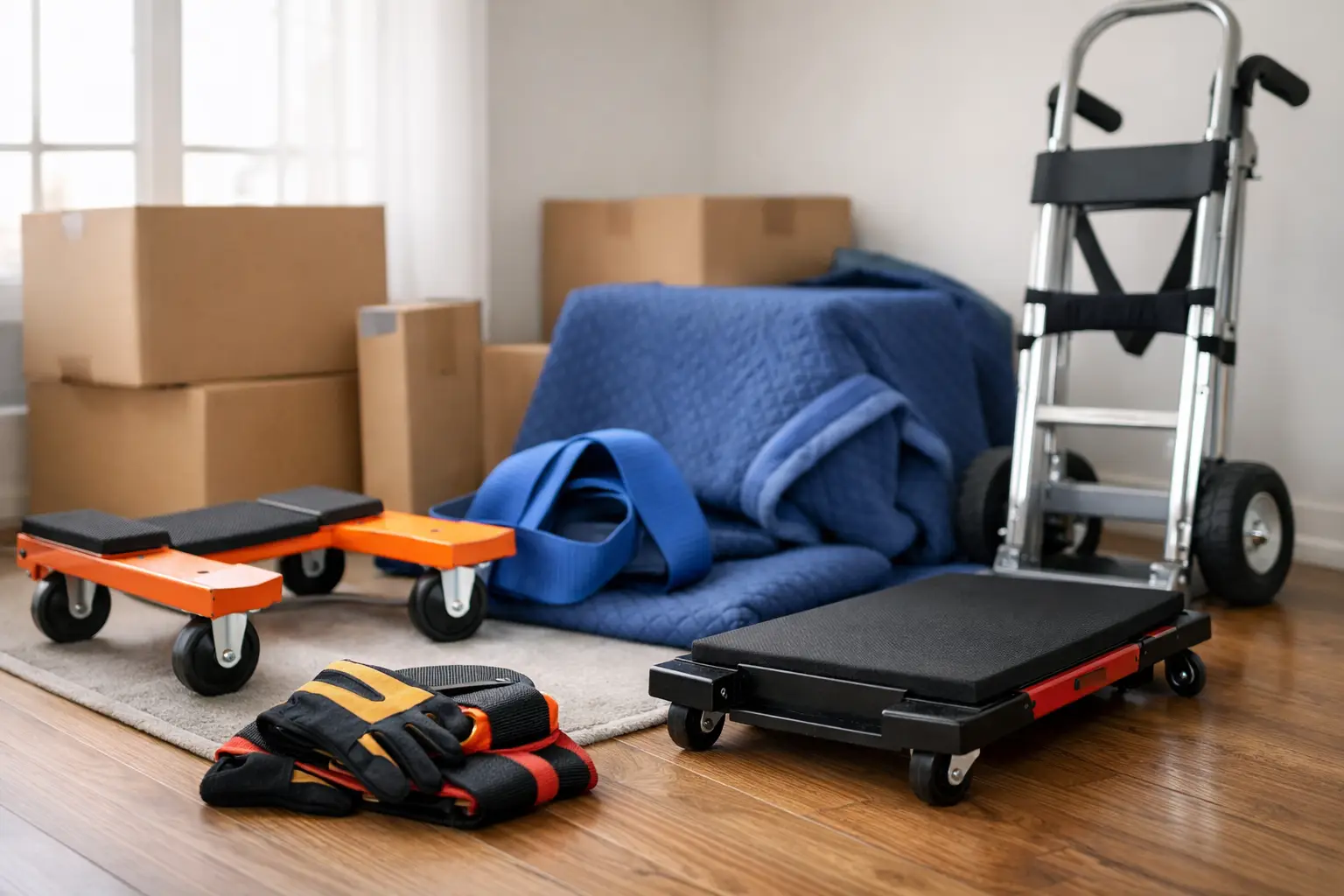
A furniture dolly is one of the most useful tools for large, flat or bulky pieces. Four-wheel dollies are ideal for moving boxed furniture, cabinets, washing machines and stacked cartons across level floors. They spread the load and keep the item close to the ground, so you are pushing rather than carrying.
An upright hand trolley is better for taller, narrower items such as a fridge, filing cabinet or chest of drawers. It has a small base plate that slides underneath the load, then tilts back onto wheels. This is efficient, but it takes care. The load must be strapped firmly to the trolley, balanced correctly and kept stable over bumps, thresholds and ramps.
Dollies are not designed for stairs. Trying to drag a loaded trolley up or down steps can damage the item, chip the stairs and put the person controlling it at risk. For stair access, use the right team and lifting method rather than forcing a wheeled solution where it does not belong.
Furniture sliders
Furniture sliders are simple pads placed beneath chair legs, sofas, tables and other items that need to move a short distance across a floor. Felt sliders suit hard surfaces such as timber, tiles and laminate. Carpet sliders have a smooth plastic base that lets furniture glide over carpet with less resistance.
They are particularly useful when rearranging a room, making space for packing or moving a bulky item towards the front door. Sliders can protect flooring from scratches, but they are not a substitute for lifting. They can slip, especially on uneven floors, and they offer no control when an item is near a step, doorway or ramp.
Use sliders for controlled, level movement. Remove them before loading the item into a vehicle.
Moving straps and lifting systems
Moving straps help two people share the weight of a bulky item. Forearm straps loop around the forearms, while shoulder harness systems transfer more of the load through the legs and torso. When used correctly, they can reduce strain on the hands and help keep the furniture closer to the body.
The catch is that straps need coordination. Both people must be similar enough in height to keep the item level, communicate clearly and lift with their legs rather than their backs. They also do not work well in tight stairwells, on wet surfaces or with awkward pieces that cannot be safely gripped.
Ratchet straps are different. They are for securing furniture inside the truck, ute or trailer. They stop items shifting during transport, but they must not be overtightened around delicate timber, upholstery or polished surfaces. Put moving blankets or corner protection between the strap and the furniture, then secure the load to proper tie-down points.
Moving blankets, pads and corner protectors
Damage often happens before the truck starts moving. A dining table scrapes a wall. A timber bed frame knocks against a doorway. A glass cabinet sits against another item in the load. Protective equipment is what prevents these common problems.
Thick moving blankets or padded removalist blankets cushion furniture during carrying and transport. They are especially valuable for timber, glass, painted finishes, mirrors, whitegoods and upholstered pieces. Stretch wrap can hold blankets in place and keep drawers or doors closed, but do not wrap damp furniture tightly for long periods. Trapped moisture can affect timber and fabric.
Cardboard corner protectors are worthwhile for tables, desks, mirrors and cabinets. Mattress bags protect bedding from dust and moisture, while heavy-duty plastic covers can be useful for lounges and armchairs in wet weather. Protection takes extra time, but replacing damaged furniture costs far more.
Ramps and loading boards
A loading ramp makes it safer to wheel heavy items into a truck. It is useful for dollies, trolleys, appliances and packed cartons, provided the ramp is rated for the load and secured properly to the vehicle. Check that the surface has grip, particularly if rain is expected.
A ramp does not eliminate risk. The angle, weight of the item and the person controlling it all matter. Heavy furniture can gather momentum quickly on an incline. One person should guide from above while another steadies from below only when it is safe to do so. Never stand directly downhill from an uncontrolled load.
For many household moves, truck ramps are best handled by experienced removalists. They know how to distribute weight, build a stable load and keep access clear while the vehicle is being loaded.
Equipment Matters, but Planning Matters More
The wrong order of work creates most moving-day problems. Before lifting anything, measure the largest furniture pieces and compare them with doorways, hallways, lifts, stairwells and vehicle access. Remove detachable legs, shelves and drawers where practical. Keep screws and fittings in labelled bags taped to the relevant item, not loose in a random box.
Clear walkways of rugs, loose cables, toys and packing materials. Protect door frames and corners if space is tight. If a large cabinet needs to be tipped or rotated, plan the movement before anyone takes the weight. A quick discussion can prevent a rushed decision halfway through a narrow passage.
It also pays to check the vehicle. A trailer may look like the cheaper option, but poor tie-down points, inadequate blankets and an uneven load can quickly turn a saving into damaged furniture. Larger items should be positioned upright where appropriate, secured against movement and loaded so the weight is balanced. Never stack heavy furniture on fragile cartons simply to fill a gap.
When DIY Equipment Is Not Enough
There is a clear line between shifting a bookcase across a room and relocating a piano, pool table, oversized fridge or heavy solid-timber buffet. Specialty items need more than a trolley and good intentions. They may require purpose-built equipment, protective wrapping, additional crew members and a loading plan that accounts for their weight distribution.
The same applies when access is difficult. Tight apartment lifts, steep driveways, multiple flights of stairs, narrow inner-city streets and long carry distances all increase the risk. Office moves add another layer, with desks, IT equipment, filing systems and the need to minimise downtime.
Blaze Removals uses appropriate moving equipment alongside trained crews, packing materials and secure transport practices for residential and commercial moves. That approach is often more cost-effective than hiring gear, gathering helpers and hoping the day goes to plan. It is particularly worthwhile when furniture is valuable, access is awkward or time is limited.
A Practical Equipment Checklist
For a straightforward home move, prioritise equipment that protects both people and property. You may need:
- A dolly or upright trolley rated for the load
- Moving blankets, stretch wrap and corner protection
- Ratchet straps and proper vehicle tie-down points
- Furniture sliders for level indoor floors
- A secure ramp if loading wheeled items into a vehicle
Gloves with a good grip and enclosed footwear are also sensible, but gloves should not create a false sense of security. If an item is too heavy, too awkward or too unstable to control, stop and change the plan.
The best result is not getting everything into the truck as fast as possible. It is arriving with your furniture intact, your walls unmarked and no one injured. Choose equipment that suits the job, allow enough time for protection and loading, and get professional support for the pieces that should never be left to chance.