



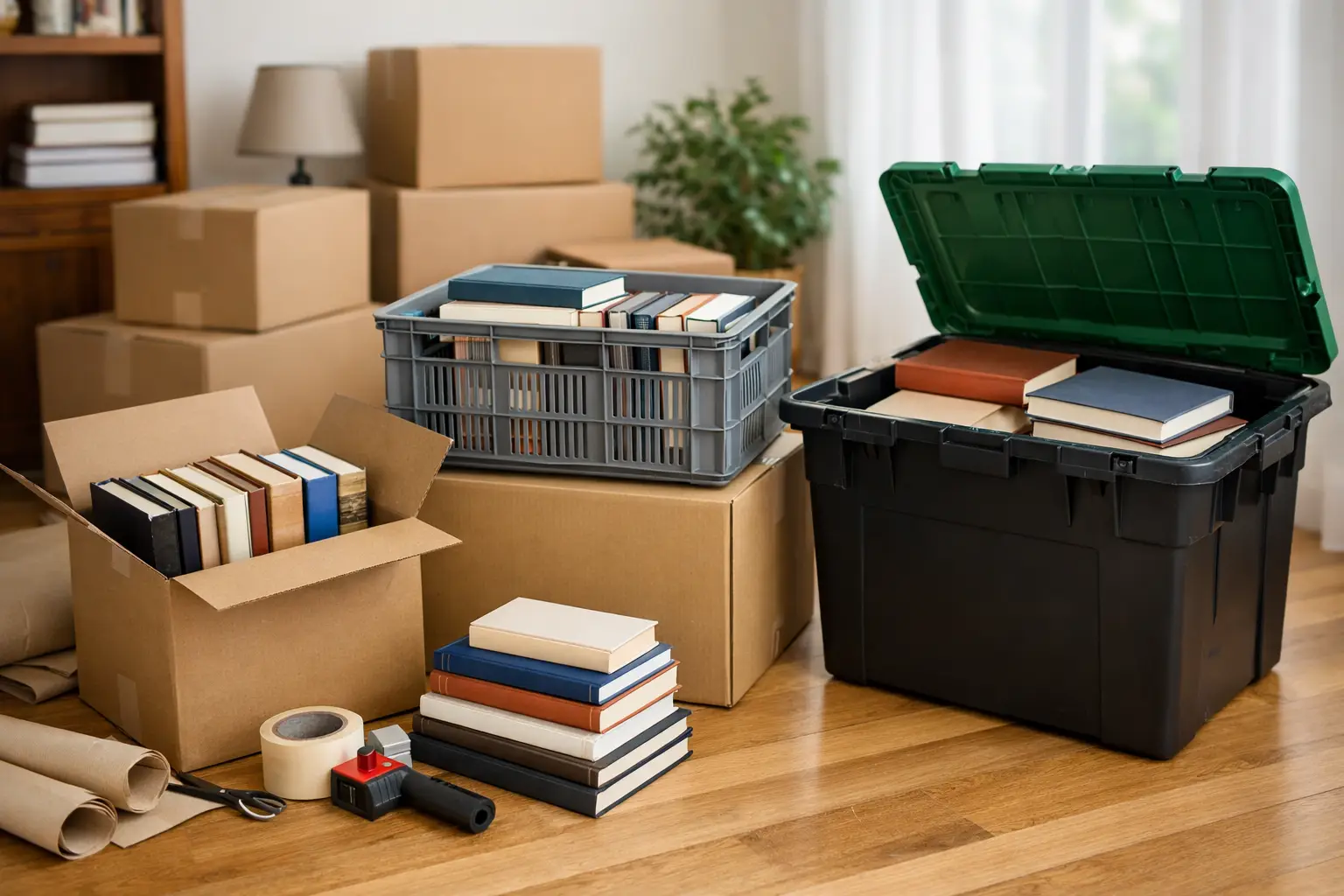
Books are easy to underestimate. A shelf full of paperbacks can become one of the heaviest loads in your home once it is packed. The best boxes for moving books are not the biggest boxes you can find. They are small, strong cartons that can be lifted safely, stacked securely and carried without the base giving way halfway to the truck.
For a move across Melbourne or interstate, getting book cartons right protects more than your books. It helps prevent strained backs, crushed boxes and avoidable delays on moving day. Here is what to choose, how to pack them properly, and when it makes sense to leave the packing to professionals.
Why books need their own moving boxes
Books are dense. A medium-to-large carton packed entirely with hardcovers can quickly weigh more than 25 kilograms, and sometimes much more. That is difficult for one person to lift safely and places real pressure on carton seams, handles and the floor of the box.
Large boxes may look efficient because they hold more, but they are usually the wrong choice for a library, study or bookcase. They encourage overpacking. A removals team can move heavy items safely, but no one benefits from a carton that needs two people to lift or cannot be stacked inside the truck.
A purpose-made book carton keeps each load manageable. It also makes loading more efficient because sturdy, similarly sized boxes stack cleanly. That stability matters when furniture, appliances and household cartons are travelling together.
The best boxes for moving books are small and double-walled
For most households, choose a small moving carton made from double-walled corrugated cardboard. Double-wall cartons have two layers of fluted cardboard between the outer liners, giving them more resistance to crushing and splitting than standard single-wall boxes.
A box around 35 to 45 litres is generally the right size for books. Exact dimensions vary between suppliers, but the aim is simple: use a carton small enough that a fully packed load remains safe to carry. As a working rule, try to keep each box at around 15 to 20 kilograms. If it feels awkward to lift from the floor, it is too heavy.
Look for a carton with a separate lid or flaps that close evenly, strong taped seams and no existing water damage. Reused boxes can work for light household items, but old supermarket cartons and worn delivery boxes are a poor choice for a full load of books. Their bottoms are often weakened by previous use, moisture or rough handling.
Small book cartons
Small cartons are the best all-round option for novels, textbooks, cookbooks, children’s books and general home libraries. They are easy to label, fit neatly in removal trucks and reduce the temptation to overfill.
If you have several shelves of books, order more small cartons than you first expect. Packing one box at a time is far safer than trying to force a whole collection into a few oversized cartons.
Archive boxes and document cartons
Archive boxes are useful for records, folders, magazines and lighter paperbacks. Many have fitted lids and carry handles, which can make them convenient for office moves or home paperwork. However, check the stated weight rating and reinforce the base with quality packing tape before use.
They are not always ideal for large hardcovers, art books or old encyclopaedias. Those heavier items need a sturdier double-wall carton with a properly taped base.
Plastic crates
Plastic moving crates are durable, reusable and less vulnerable to rain than cardboard. They can be a good option for short moves, office files or valuable books that you want to keep protected from moisture. Their fixed size also stops overpacking to a degree.
The trade-off is that plastic crates are heavier before you put anything in them, and their hard sides can scuff delicate covers if books are not packed tightly. They are practical, but they are not automatically better than strong cardboard book cartons for every move.
How to pack books without making boxes too heavy
Start by sorting your collection. Set aside books you no longer want, duplicate titles, damaged paperbacks and magazines you will not read again. There is little value in paying to move items that will sit unopened in the new home. Donate usable books, sell what is worth selling, and recycle the rest responsibly.
Pack larger hardcovers flat where possible, particularly if they are old, fragile or have loose spines. Place the heaviest books along the bottom of the carton and build upwards with lighter books. Standard-sized books can be packed upright with their spines against the side of the box, much like they sit on a shelf.
Avoid packing books spine-up, as their pages can spread and the binding can be stressed. Do not wedge books so tightly that you need to force the carton closed either. A little care here prevents bent covers and damaged spines.
Fill empty spaces with packing paper, clean towels or light linen. The goal is to stop books shifting in transit, not to add unnecessary weight. Avoid using heavy items such as photo frames, tools or kitchenware to fill gaps. A book carton should contain books and lightweight cushioning only.
Before sealing the carton, lift it a few centimetres from the floor. If the weight feels excessive, remove several books and start another box. Tape the base using the H method: one strip along the centre seam, then one strip across each edge where the base flaps meet. Repeat this on top once the box is closed.
Protecting valuable, old and oversized books
Most modern books can travel safely in a clean, dry carton with basic paper cushioning. Rare editions, signed copies, family albums, first editions and large art books deserve extra attention.
Wrap each valuable book in unprinted packing paper or acid-free tissue where appropriate. Keep them away from direct contact with tape, bubble wrap adhesive or newsprint, which can mark covers. For especially delicate items, place a sheet of firm cardboard on the bottom and top of the stack to reduce pressure.
Oversized books should be packed flat in shallow, strong cartons. Do not stand heavy coffee-table books upright unless they fit without leaning. Their bindings can be damaged when they are forced into position or when the carton is tipped during handling.
If books have been stored in a garage, shed or damp cupboard, inspect them before packing. A cardboard box will not solve an existing mould or moisture problem. Dry the books properly and separate any affected items so they do not transfer odour or mould to the rest of your collection.
Label every book carton clearly
Book cartons often look identical once they are stacked in a hallway or truck. Clear labels save time at both ends of the move. Write the destination room on at least two sides, such as “Study – Books” or “Bedroom 2 – Children’s Books”. Add “Heavy” so anyone lifting the carton knows what to expect.
If your library is organised by author, subject or series, add a simple range label such as “Fiction A-H” or “Cookbooks”. This takes seconds while packing and makes unpacking far less frustrating. You do not need to number every box unless the collection is extensive, but a basic system helps keep sets together.
Keep a separate small carton or carry bag for books you will want immediately after arrival, such as children’s bedtime books, reference materials, work manuals or a favourite cookbook. It is a simple way to make the first night in a new home feel more organised.
Mistakes that cause damaged cartons and sore backs
The most common mistake is using a large moving box because there are still books left on the shelf. The second is relying on weak tape or a used carton with a soft base. Both can lead to split boxes, dropped books and an unnecessary safety risk.
Another issue is mixing books with fragile household goods. A few hardcovers placed on top of glassware can crush the items below, while loose décor can damage book covers. Keep book boxes dedicated to books, paper records and light packing material.
Do not leave book packing until the final hour. Books take longer than expected because they need sorting, lifting and careful weight checks. Start with the shelves you use least and leave current reading or work materials until last.
When professional packing is the practical choice
Professional packing is worth considering when you have a large home library, a tight moving schedule, valuable books or an office archive that must stay organised. It also helps when back injuries, limited time or access challenges make heavy cartons risky.
A trained packing team can supply suitable cartons, pack to safe weights, protect valuable items and label everything for a more orderly unpack. For households and businesses moving in Melbourne, Blaze Removals can handle packing alongside transport, so the same team is accountable from preparation through to delivery.
Choose sturdy small cartons, keep every load manageable and label as you go. Your books will arrive in better condition, and you will not be left wrestling an overloaded box when there are already plenty of other moving-day jobs to manage.