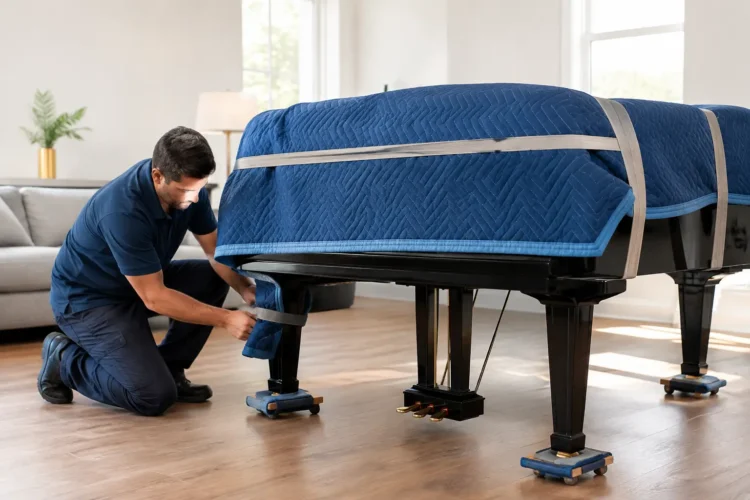




A scratched dining table is frustrating. A damaged piano, a broken office server or a box of irreplaceable family items is something else entirely. That is why understanding removalist insurance versus transit cover before moving day matters. These terms are often used loosely, but they can refer to different protections, limits and claims processes.
The practical rule is simple: do not assume that because a removalist is insured, every item in your move is automatically insured for its full value. Ask what cover applies to your goods, when it applies and what you need to do if something goes wrong.
What people mean by removalist insurance
“Removalist insurance” is a broad term. It may describe insurance held by the moving company, insurance offered as an optional add-on, or a separate policy arranged for a customer’s goods. Those are not necessarily the same thing.
A professional removalist may carry business insurances designed to protect its operations. Depending on the policy, this can include public liability and cover connected to the work being performed. Public liability generally concerns injury to people or damage to third-party property, such as a wall, lift or building foyer. It should not be treated as automatic insurance for every item loaded onto the ute.
Some removalists also offer goods-in-transit protection or may help arrange transit cover through an insurer. The details matter. Cover can be subject to declared values, limits per item, an excess and specific handling conditions.
The phrase “fully insured” sounds reassuring, but it does not answer the questions that count: Is your particular item covered? For how much? Is accidental damage covered while it is being moved? Does cover apply while goods are in storage? And is there an excess to pay if you make a claim?
Removalist insurance versus transit cover: the key difference
Transit cover is usually focused on the goods being transported. It may cover loss of or damage to insured belongings during a specified journey, subject to the policy wording. It is often the more relevant form of protection when your main concern is the value of furniture, cartons, electronics or business equipment in the ute.
Removalist-held insurance, on the other hand, often protects the business against particular liabilities arising from its work. It may help where the removalist is legally liable, but legal liability is not always the same as paying the full replacement value of an item. The outcome can depend on how the damage occurred, the service agreement and the applicable insurance policy.
This distinction is especially important for high-value belongings. If a removalist’s liability is limited under its terms, or the cause of loss is excluded, you may not receive the amount you expected. A separately arranged transit policy may offer clearer protection for declared goods, but only if it suits the type of move and items involved.
Neither option is automatically better in every situation. A local move from a one-bedroom apartment with standard household furniture has different risks from an interstate relocation, a piano move or an office relocation involving specialised equipment.
When transit cover may be worth considering
Transit cover can make sense when the financial impact of damage would be difficult to absorb. This is not only about expensive items. It is also about the cost and inconvenience of replacing essential belongings quickly.
Consider it carefully if you are moving interstate, placing goods into storage, transporting antiques or artwork, or moving items with a high replacement cost. It can also be useful when you have packed valuable possessions yourself and want cover that is specifically tied to their transport.
For businesses, the decision is often clearer. A damaged workstation, point-of-sale system or stock line can create downtime as well as replacement costs. Ask whether the proposed cover applies to business goods, IT equipment, documents and stock, as some policies set separate limits or exclusions for these items.
That said, transit cover is not a blank cheque. It may cost extra, carry an excess and require you to nominate values before the move. Under-declaring a high-value item can leave you short if a claim is approved. Over-insuring can mean paying more than necessary. Accurate information is the best starting point.
Read the exclusions before you book
The exclusions section is where many moving-day assumptions fall apart. Policy wording differs, so always check the cover offered for your booking. Still, several exclusions and conditions appear regularly in moving-related policies.
Self-packed cartons may have limited cover, particularly where damage could have resulted from inadequate packing. Fragile items can require professional packing or clear evidence that they were suitably protected. Some policies exclude mechanical or electrical faults unless there is visible external damage. In other words, a television that does not switch on after a move may not be covered if there is no apparent impact damage.
Certain goods may also be excluded or subject to low limits, including cash, jewellery, important documents, plants, perishable goods, dangerous goods and items with pre-existing damage. Flat-pack furniture, particleboard items and furniture weakened by age or prior repairs can present their own issues.
Storage is another point to clarify. Cover during loading and transport does not always continue while your goods are sitting in a storage facility. If your move includes a gap between homes, ask exactly when cover starts and ends.
The questions to ask your removalist
Before accepting a quote, ask for clear written answers rather than relying on a quick verbal assurance. You want to know whether transit cover is available, whether it is included in the quote or costs extra, and whether it is arranged by the removalist or directly with an insurer.
Also ask how claims are handled, what excess applies and how quickly damage must be reported. Some claims require notice within a short period after delivery, so waiting until you unpack every box weeks later may cause problems.
For valuables, ask about maximum limits per item and whether you need to declare each item separately. A general household total may not be enough for a piano, artwork, premium electronics or a specialised piece of business equipment.
It is also sensible to ask what the removalist will do to prevent damage in the first place. Protective blankets, mattress covers, furniture wrapping, secure loading, trained crews and suitable equipment are not substitutes for insurance, but they reduce the chance that you will need to use it.
Your role in protecting the move
Insurance works best alongside good preparation. Take clear photos of high-value and fragile items before they are packed. Keep purchase records, valuations or receipts where possible. If an item already has a scratch, dent or fault, make a note of it before moving day.
Pack cartons properly, avoid overloading them and label fragile items clearly. If you would rather not take the risk with glassware, artwork or delicate electronics, professional packing can be a practical choice. It creates a more consistent packing standard and avoids the uncertainty that can arise when contents have been packed in a hurry.
On delivery, inspect larger or high-value items before the crew leaves where possible. If you notice damage, photograph it straight away and record the details. Prompt reporting gives you the best chance of meeting any claim requirements.
Choosing cover for a Melbourne move
For a straightforward local Melbourne move, you may decide that basic protection and careful handling are enough for the value of your belongings. For a larger family home, an interstate job or a commercial relocation, a closer look at transit cover is usually worthwhile.
The right decision comes down to the items being moved, the distance travelled, who is packing, whether storage is involved and how much financial risk you are comfortable carrying yourself. Cheap cover that excludes the items you care about is not good value. Neither is paying for broad cover when a lower level genuinely suits your move.
At Blaze Removals, the focus is on careful planning, professional handling and clear conversations before the ute arrives. When you request your quote, raise insurance and transit-cover questions early, declare valuable items accurately and keep the policy wording with your moving paperwork. That small amount of preparation can make moving day far less stressful if the unexpected happens.