


A piano is not just another heavy item on the removal truck. It is a finely balanced instrument with thousands of moving parts, a cast-iron frame, delicate finishes and a weight that can quickly damage floors, walls or people if the move is poorly planned. Proper piano moving preparation makes the job safer from the first inspection to final placement in your new home.
Whether you are moving an upright from a ground-floor unit or a grand piano from a family home, the goal is the same: give professional movers a clear, safe path and protect the instrument from knocks, moisture and sudden movement. A little planning before moving day can prevent expensive repairs, delays and unnecessary stress.
Start piano moving preparation with the right information
The first step is identifying exactly what is being moved. Tell your removalist whether you have an upright, baby grand, grand, player piano or digital piano. Approximate dimensions, age and condition are also useful. An upright piano can commonly weigh 180 to 300 kg, while a grand piano may be considerably heavier. The size and weight affect the crew, equipment and vehicle space required.
Be clear about the access at both properties. Include every step, stair flight, narrow hallway, tight corner, driveway slope, lift and gate between the piano and the truck. Photos are often helpful, particularly where access is awkward. A piano that fits through a doorway may still be difficult to turn around a narrow landing or move past a low ceiling.
Do not assume a few extra hands will solve a difficult access issue. Specialist piano moving equipment and experienced handling matter more than muscle. If there are stairs, a balcony lift, restricted parking or a long carry from the property to the truck, raise it when arranging your quote. Accurate information helps the movers send the right team and avoids surprises on the day.
Measure the access route at both addresses
Measure the piano itself, then measure the narrowest points along the route. Check door frames, corridors, stairwells and turns, not just the front door. Remember that protective padding adds bulk, and the piano may need to be angled while it is being moved.
At the new property, decide where the piano will sit before it arrives. Repositioning a piano after it has been unloaded creates extra handling and extra risk. Mark out the space with masking tape if you are unsure how it will fit alongside furniture, doors and walkways.
For apartment moves, contact building management ahead of time. Ask whether you need to book a loading bay or lift, provide a certificate of currency, use lift protection or move within set hours. Melbourne CBD buildings can have strict loading access and limited kerbside parking, so this step can make a major difference to timing.
Clear and protect the route
Create a direct path from the piano to the exit. Remove rugs that could slip, children’s toys, pot plants, shoe racks, side tables and loose cables. Open internal doors fully and secure them where possible. If a gate swings into the path, tie it back safely.
Protect the areas most likely to be bumped or scratched. Corners, door frames, stair rails and timber floors deserve attention. Your removalists may bring floor runners, padded blankets and other protection, but clearing the route remains the homeowner’s job. It also gives the team room to work without navigating clutter.
Outside, check the path from the door to the truck. Uneven pavers, wet decking, loose gravel and steep driveways all need to be identified. If rain is expected, make sure the route is as dry as possible and discuss weather plans with the moving team. Pianos should not be left exposed to rain while other items are loaded.
Prepare the piano without taking it apart
Most acoustic pianos should not be dismantled by the owner. The internal action, strings and pedals are precise components, and incorrect handling can create problems that are not obvious until the piano is played again. Leave specialist preparation, wrapping and loading to trained movers.
There are still a few sensible things you can do. Remove sheet music, ornaments, lamps and anything sitting on top of the piano. Empty any storage compartments. Close and lock the keyboard lid if it has a lock. If it does not lock, tell the movers rather than using tape directly on the finish.
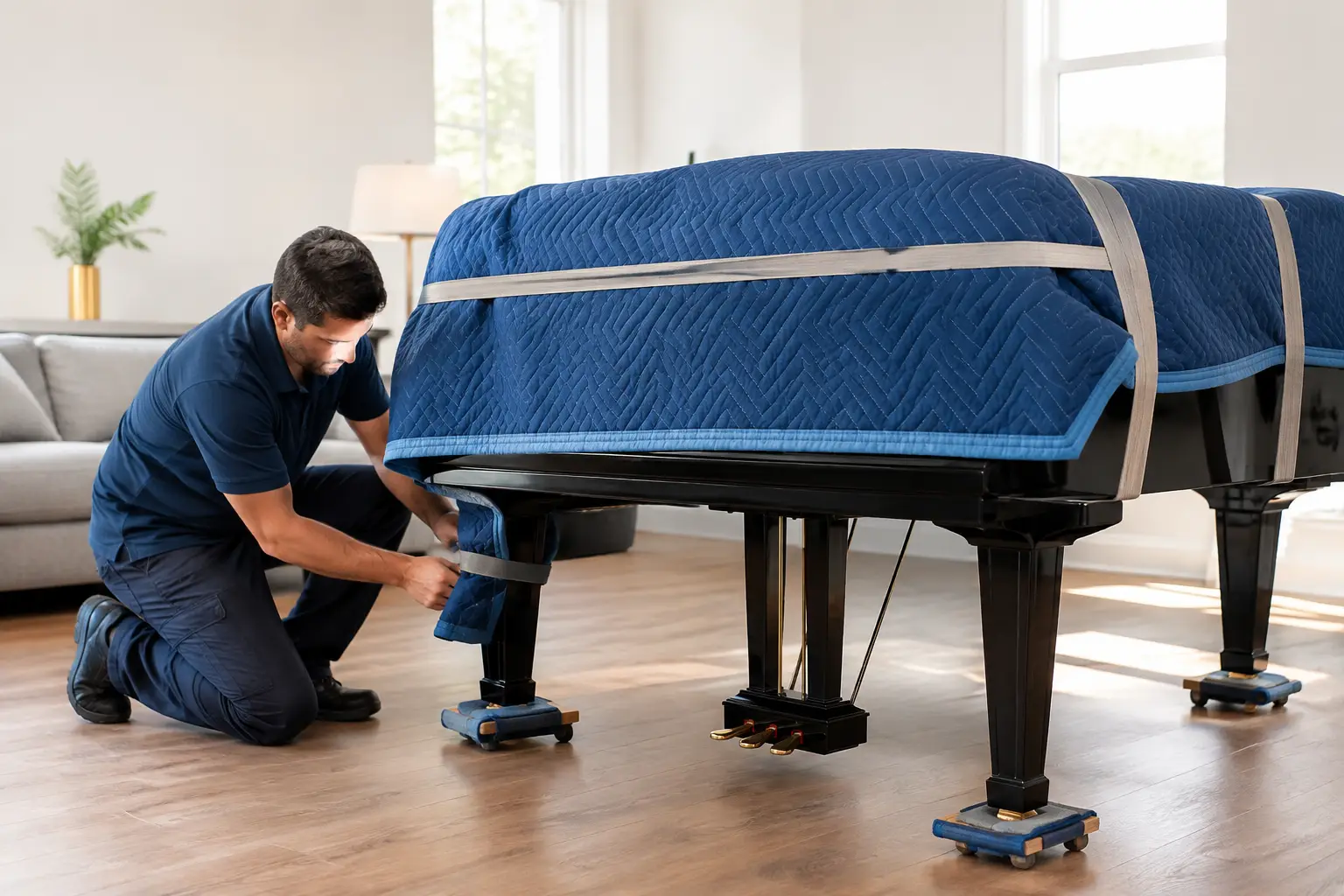
Avoid wrapping the piano in plastic for a long period, especially in warm or humid conditions. Trapped moisture can affect timber and finishes. Professional movers use suitable padded covers and securing methods designed for transport. Never rely on household blankets alone or attempt to roll an upright piano on its small castors. Those castors are not designed for moving the piano through a house or over uneven ground.
Grand pianos need additional planning
A grand piano generally requires more specialised preparation because its legs and pedal assembly may need to be removed and the instrument placed on a purpose-built piano skid or board. This is not a DIY job. It requires correct tools, protective wrapping and a team that understands how the weight is distributed.
Before the crew arrives, clear enough space around the piano for them to work safely. Keep pets and children out of the room, and do not move the lid, legs or pedals yourself unless you have received specific professional instructions. The safer option is to let the crew assess and prepare the instrument on site.
Plan parking, timing and building access
A piano move often takes longer than customers expect, not because the team is slow, but because safe handling requires careful positioning and communication. Reserve parking as close as legally possible to the property. A long carry adds time, increases handling and may affect the moving plan.
If street parking is limited, organise permits or temporary access approvals early. Keep the driveway clear of cars, bins and trailers. For homes on busy roads, consider the time of day and school traffic. For office moves, arrange a quiet window when staff and visitors are not using the same corridors or lifts.
Give the removalist the best contact number for moving day and keep your mobile nearby. If access changes at the last minute, such as roadworks blocking the driveway or a lift going out of service, call as soon as possible. Early notice gives the team the best chance to adjust the plan.
Choose the right final position
Where the piano sits after the move affects its condition as much as the transport itself. Keep it away from direct sun, exterior doors, heating vents, fireplaces and air-conditioner outlets. Rapid temperature or humidity changes can affect the timber soundboard and tuning stability.
An internal wall is often a practical choice, provided the room has stable conditions and the piano does not block a walkway. Do not place it hard against a damp wall or beside a window that receives strong afternoon sun. If the only suitable location is near a source of heat or cold, speak with a piano technician about options for managing the environment.
Make sure the floor can safely support the weight. Most homes can accommodate an upright piano without issue, but upper-level rooms, older properties and grand pianos may need more thought. If you have concerns, seek advice before moving day rather than discovering the issue after delivery.
Expect tuning after the move
Even a careful piano move can affect tuning. Changes in temperature, humidity and position can cause the strings and wooden components to settle differently. This does not automatically mean the piano was mishandled.
Allow the piano to acclimatise in its new room before booking a tuner. The right waiting period depends on the season, the distance moved and the conditions in the new home, but one to two weeks is often sensible. If the piano has not been tuned for years, the technician may recommend more than one tuning session to bring it back gradually.
Leave the heavy work to trained piano movers
Piano moving preparation is about removing obstacles before the lifting starts. Provide accurate details, measure access, clear the route, organise parking and decide where the piano will live. Then let trained removalists manage the wrapping, lifting, securing and transport.
At Blaze Removals, specialist items are planned around access, weight and safe handling requirements, not treated like ordinary furniture. A well-prepared move gives your piano the protection it deserves and lets you enjoy hearing it again in its new home, rather than worrying about what went wrong on the way.