



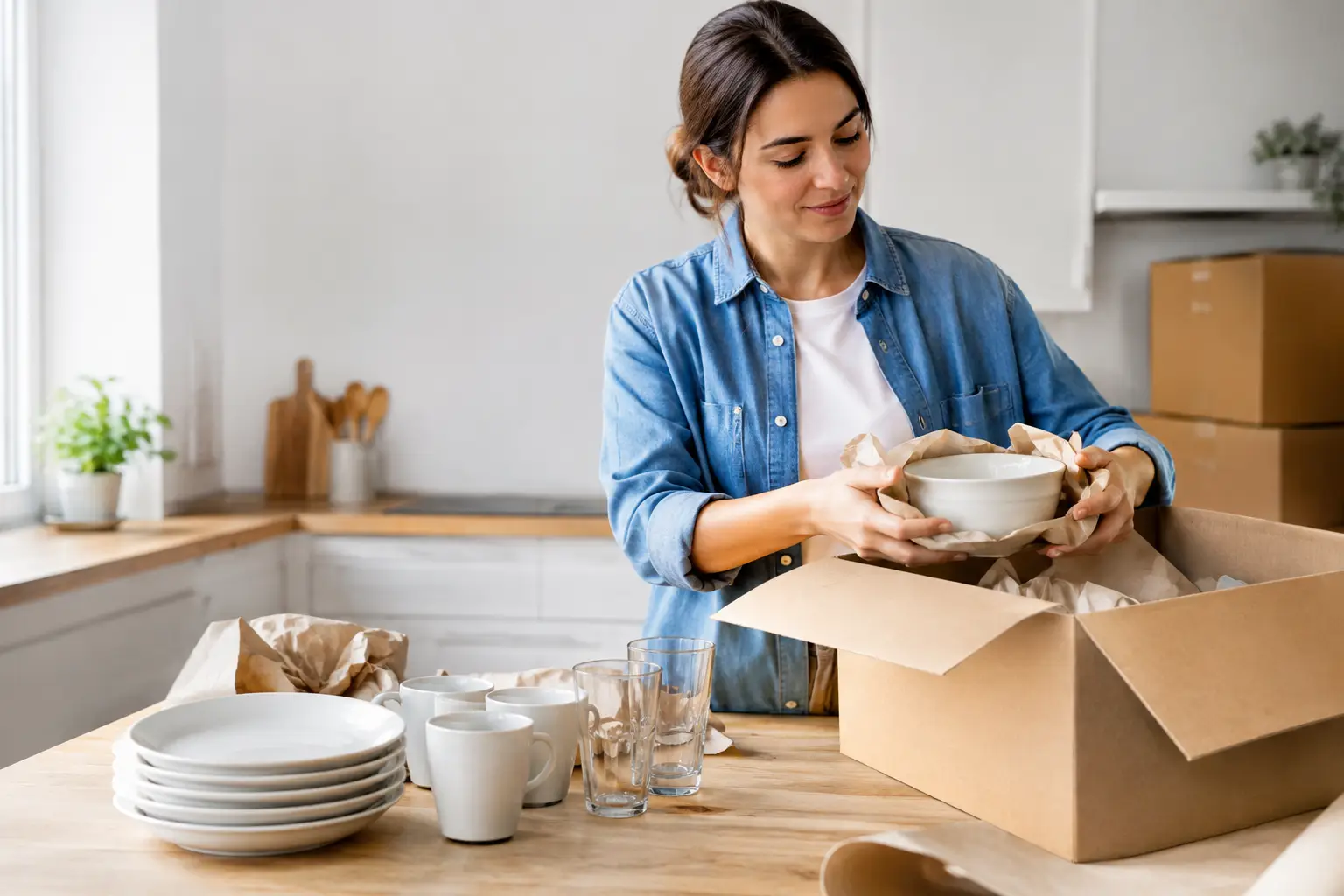
The kitchen is usually the last room people want to pack and the first room that causes trouble. It has fragile glassware, heavy cookware, sharp knives, half-used pantry items and appliances with awkward cords. Knowing how to pack a kitchen properly means fewer breakages, less wasted time on moving day and a faster first meal in your new home.
Start earlier than you think. A family kitchen can take a full day to sort and pack well, particularly if cupboards have not been cleared in years. Give yourself time to make decisions rather than throwing everything into boxes at the last minute.
Start by reducing what you need to move
Packing a kitchen is not just about wrapping plates. It is also the best opportunity to clear out duplicates, expired food and appliances you no longer use. Moving unwanted items costs space, time and money.
Check pantry shelves, the freezer, under the sink and the back of every drawer. Bin expired food and safely dispose of cleaning products you cannot transport. Donate unopened non-perishables, spare mugs, serving dishes or small appliances that are still in good condition but no longer earn their bench space.
Use up frozen meals and pantry staples in the week before the move. This reduces waste and leaves less for the removalists’ truck. If you are moving locally around Melbourne, some chilled items may be manageable in an esky for a short trip, but frozen food and opened refrigerated goods are still risky on a warm day. When in doubt, use it, give it away or discard it.
Get the right packing materials first
Kitchen items need stronger protection than clothes or linen. Thin cartons and a few supermarket bags are a false economy when you are carrying cast-iron pans or a box full of glasses.
Use sturdy small and medium moving boxes for heavy kitchenware. Small boxes are easier to lift safely and less likely to split under the weight of plates, tins and cookware. You will also need packing paper, bubble wrap for delicate pieces, strong tape, a marker and labels. Clean tea towels can provide extra padding, but they should not be the only protection for fragile items.
Avoid packing glassware directly in newspaper where possible. Ink can transfer to pale ceramics and glass, creating more work when you unpack. Plain packing paper is cleaner and more reliable.
How to pack a kitchen by category
Work through one cupboard or drawer at a time. This keeps like items together, prevents half-packed boxes around the floor and makes unpacking more straightforward.
Plates, bowls and serving ware
Wrap each plate or bowl in packing paper, then pack plates on their edge rather than flat. Think of how records sit in a crate: the edges handle pressure better than a tall stack lying flat. Place scrunched paper or a folded towel at the bottom of the carton first, and fill gaps as you go so nothing shifts.
Keep plates in small boxes. Even a modest stack of dinner plates becomes very heavy. Mark the carton as fragile and write which room it belongs in, but do not rely on the word “fragile” alone. Good wrapping and a well-filled box offer the real protection.
For serving platters, casserole dishes and larger bowls, wrap each piece individually and stand them upright where practical. Heavy ceramic pieces can go in a separate carton rather than being mixed with light glassware.
Glasses, mugs and stemware
Wrap glasses one at a time, paying attention to rims, handles and stems. Start by placing paper inside a glass, then wrap the outside and twist the excess paper around the base. Pack glasses upright in rows, with cushioning between each item.
Stemware needs extra protection. Wrap the stem first, then the bowl, and avoid placing anything heavy on top. If you have original boxes with dividers, use them. Otherwise, create sections with cardboard or pack each glass tightly enough that it cannot knock into the next one.
Mugs are sturdier than wine glasses but handles still break easily. Wrap the handle separately before wrapping the whole mug. Do not fill mugs with loose utensils or other hard items.
Pots, pans and cookware
Pots and pans are durable, but they can damage everything around them. Nest them by size with packing paper between surfaces, especially for non-stick cookware. Put lids on edge in a separate, well-padded box or wrap and stand them between pans.
Cast-iron cookware deserves its own small carton because of its weight. Keep the box liftable. If a box needs two hands and a strained back to move across the kitchen, it is too heavy.
Knives and sharp utensils
Kitchen knives must be packed securely, never loose in a drawer box. Wrap each knife in several layers of paper or use blade guards, then tape the wrapping so it cannot slide off. Bundle wrapped knives together and clearly label the carton.
For cutlery, use a tray if you have one, or group forks, spoons and blunt utensils in paper bundles. Keep sharp tools such as peelers, graters, skewers and scissors wrapped separately. This protects both your belongings and anyone handling the box.
Appliances and cords
Clean and dry appliances before packing. Empty crumbs from the toaster, drain the coffee machine and make sure the blender jug is dry. Moisture trapped in a box can lead to mould, odours and damaged electrical components.
Where possible, use the original packaging for items such as mixers, coffee machines and air fryers. If it is gone, use a snug box with paper around the appliance. Remove loose attachments, wrap them separately and place them in the same labelled carton. Tape cords neatly against the appliance or place them in a labelled bag inside the box. Never tape directly onto a polished or painted surface.
Pack an essentials box you keep with you
You do not want to search through ten cartons for a kettle after a long moving day. Pack a separate kitchen essentials box and take it in your car, not on the truck. Include enough for your first night and morning: kettle, tea or coffee, mugs, basic plates and cutlery, a saucepan, frying pan, chopping board, can opener, dish soap, sponge, paper towel and a few snacks.
Add medication, pet supplies and important documents to separate personal bags. These are not items to pack into general moving cartons.
Label every box for the new kitchen
A box marked only “kitchen” is not very useful when you are tired and surrounded by cartons. Write a clear description on at least two sides, such as “Kitchen – everyday plates”, “Kitchen – glassware” or “Kitchen – pantry sealed food”. Add “fragile” where needed and use arrows to show which way the box should stay upright.
If your new kitchen has a different layout, take a quick photo of your current cupboards before packing. It can help you remember what lived where, particularly for spice drawers, baking supplies and less-used utensils. It is not essential, but it can speed up the first unpack.
Keep boxes safe for the removal team
Close each carton with strong tape across the centre seam and along both edges. Do not overfill boxes so the top bulges, and do not leave empty space that lets items move around. The goal is a firm, square carton that stacks safely.
Place the heaviest kitchen cartons close to the exit on moving day, with fragile boxes on top or set aside where they cannot be accidentally loaded under furniture. Tell your removalists which boxes contain glassware, sharp items or appliances requiring careful handling. Clear information helps the crew load the truck safely and efficiently.
If time is tight, or you have a large kitchen with expensive glassware and appliances, professional packing can remove a major job from your moving list. Blaze Removals can pack, transport and unpack household items with the same practical care needed for a smooth move.
A well-packed kitchen does more than protect your favourite mugs. It gives you a calm, usable space at the other end, so you can make a proper cuppa and start settling in.