



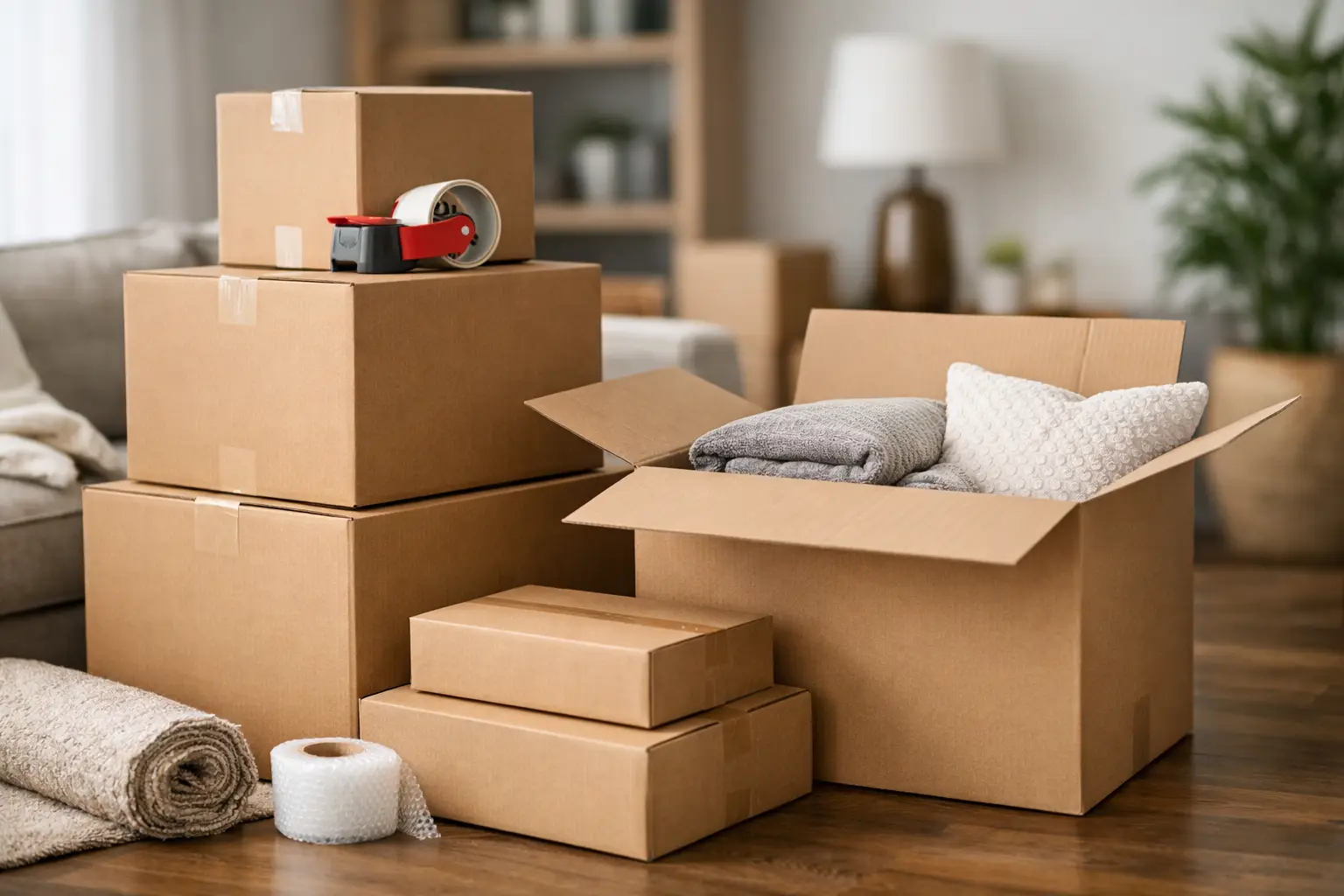
A box that splits halfway down the stairs can turn a straightforward move into a costly mess. The best moving boxes for packing are not simply the cheapest cartons you can find. They need to suit the weight of your belongings, stack safely in the truck and give fragile items proper protection from door to door.
For most home moves, a small range of strong, purpose-made boxes does the job better than a random pile of used cartons. Choosing the right sizes before you start also makes packing faster, loading safer and unpacking far less frustrating.
Best moving boxes for packing by room and item
The best approach is to use several box sizes rather than trying to pack your whole home into large cartons. Large boxes look efficient, but they become unsafe quickly when filled with books, kitchenware or tools. Smaller boxes carry heavy items better. Larger boxes are for light, bulky belongings.
Small boxes for heavy items
Small moving boxes are the workhorses of a well-packed move. Use them for books, records, canned food, documents, tools, small appliances and tightly packed kitchen items. A compact box prevents you from overloading it, which protects both the carton and the person lifting it.
Books are a common packing mistake. They should be packed flat or spine-down in small boxes, with no room for them to shift. Fill gaps with packing paper, tea towels or linen. Do not make a book box heavier just because there is room left at the top.
Medium boxes for everyday household goods
Medium cartons are usually the most useful size for a typical house or unit move. They suit pots and pans, pantry goods, shoes, toys, folded clothes, framed photos and small electronics. If you are buying only one general-purpose size, medium boxes offer the best balance between capacity and manageable weight.
For kitchen packing, line the base with scrunched packing paper and wrap fragile pieces individually. Place heavier items at the bottom, lighter pieces above, then fill every gap. A carton that is full but not overstuffed is less likely to collapse or crush when stacked.
Large boxes for light, bulky belongings
Large moving boxes are designed for items with volume, not weight. Think doonas, pillows, cushions, linen, lampshades, soft toys and lightweight plasticware. They are also useful for clothing that has already been folded or vacuum-packed.
Avoid using them for books, ceramic dinnerware or heavy appliances. A box can look fine on the floor but fail when it is lifted, especially if the bottom has not been properly taped. If you need two people to lift it before it even reaches the truck, it has been packed incorrectly.
Wardrobe boxes for hanging clothes
Wardrobe boxes are a practical upgrade for suits, dresses, coats and other clothes you do not want folded. They include a hanging rail, so garments can be lifted from the wardrobe and hung straight inside. At the new property, they can go directly back into the cupboard.
They cost more than standard cartons, so they are not necessary for every item of clothing. Use them for delicate, formal or difficult-to-fold pieces, and pack everyday clothing into medium cartons, suitcases or storage tubs.
Specialty cartons for fragile and awkward items
Some belongings need more than a standard moving carton. Picture boxes, television boxes, wine cartons and dish-pack cartons provide a closer fit and more protection for valuable items. They are worth considering when replacing an item would be expensive or inconvenient.
A television should ideally travel upright in its original packaging. If that carton is gone, use a correctly sized TV box with foam corners or thick protective padding. Never lay a television under heavier furniture or loose items in the truck.
What makes a moving box strong enough?
A moving box is only as reliable as its cardboard quality, construction and tape job. Look for double-walled cardboard for heavier household goods and fragile items. It has two layers of fluting inside the board, giving it far better resistance to crushing and punctures than a thin, single-wall carton.
Single-wall cartons can still be useful for linen, cushions and lightweight clothes. The trade-off is that they should not carry much weight or form the bottom layer of a high stack. If you are moving during wet Melbourne weather, keep cartons inside until loading and avoid leaving them on damp ground.
The base matters as much as the walls. Tape along the centre seam, then add two strips across it for a secure H-shaped seal. Do this even with new boxes. Reused cartons may be economical, but inspect every corner, base and handle cut-out first. Any soft, creased or water-damaged box belongs in the recycling, not under your belongings.
How many boxes do you actually need?
There is no single number for every move. It depends on how long you have lived there, how much storage you use and whether you are packing an apartment, family home or office. As a practical starting point, a one-bedroom home may need 20 to 35 boxes, while a three-bedroom home can easily require 60 to 100 or more.
Rather than buying every carton at once, start with the rooms you use least. Pack decorative items, books, spare linen and off-season clothing first. Once those boxes are filled, you will have a more accurate view of what remains.
Keep a small buffer of medium and small boxes available for the final days. These are often needed for pantry items, bathroom cupboards, chargers, last-minute toys and the collection of household bits that only become visible when shelves are empty.
Pack boxes so they survive the move
Good cartons still need good packing. Every box should be full enough to hold its shape, but not so full that the flaps bulge or cannot close flat. Use packing paper, clean linen or bubble wrap to fill empty spaces. Loose contents are more likely to break, even in a strong carton.
Follow a simple weight rule: heavy things in small boxes, light things in large boxes. Keep individual boxes at a weight you can safely lift close to your body. If a carton is awkward, divide it into two. Saving one box is not worth a strained back or damaged contents.
Label each carton on at least two sides, not just the top. Write the destination room and a clear description, such as “Kitchen – glassware” or “Main bedroom – bedside items”. Mark fragile boxes clearly, but pack them properly as well. A fragile label is a warning, not a substitute for internal protection.
For boxes containing essential items, write “Open first”. Include medications, chargers, toiletries, a kettle, basic dishes, pet supplies, bedding and a change of clothes. Keep passports, jewellery, important paperwork and other high-value items with you rather than in the moving truck.
Avoid these common box mistakes
The most expensive packing errors are usually simple ones: overfilled cartons, weak tape, mixed-room boxes and poor labelling. Another common problem is using rubbish bags for anything that can be crushed, torn or mistaken for rubbish. Bags are suitable for soft linen and clothing, not for kitchenware, electronics or valuables.
Do not leave empty space at the top of a box that will be stacked. The weight above can push the lid down and damage the contents. Fill the space, close the flaps flat and tape every box shut. Open cartons are harder to stack, easier to snag and more likely to spill.
If you are moving furniture, protect it separately with removal blankets, shrink wrap or proper furniture covers. Boxes should not be used as makeshift protection for a dining table, mattress or sofa. Each item needs the right material for the job.
When professional packing is the better call
Packing your own home can save money, particularly when you have time and straightforward belongings. It becomes harder when you are managing work, children, a settlement date or fragile items such as artwork, antiques and large mirrors. Office relocations also need a more controlled system to keep files, equipment and workstations organised.
Professional packers can supply suitable cartons, wrap breakables efficiently and load boxes in a way that supports safe transport. For Melbourne households facing a tight deadline or a complex move, Blaze Removals can handle packing alongside transport and specialty-item moving, reducing the number of jobs on your move-day list.
The right boxes will not make moving day silent or effortless, but they will make it safer, more organised and easier to unpack. Choose strength over bargain-bin cardboard, match each carton to its contents and pack one room at a time. That preparation pays off the moment the first box arrives intact in the right room.