



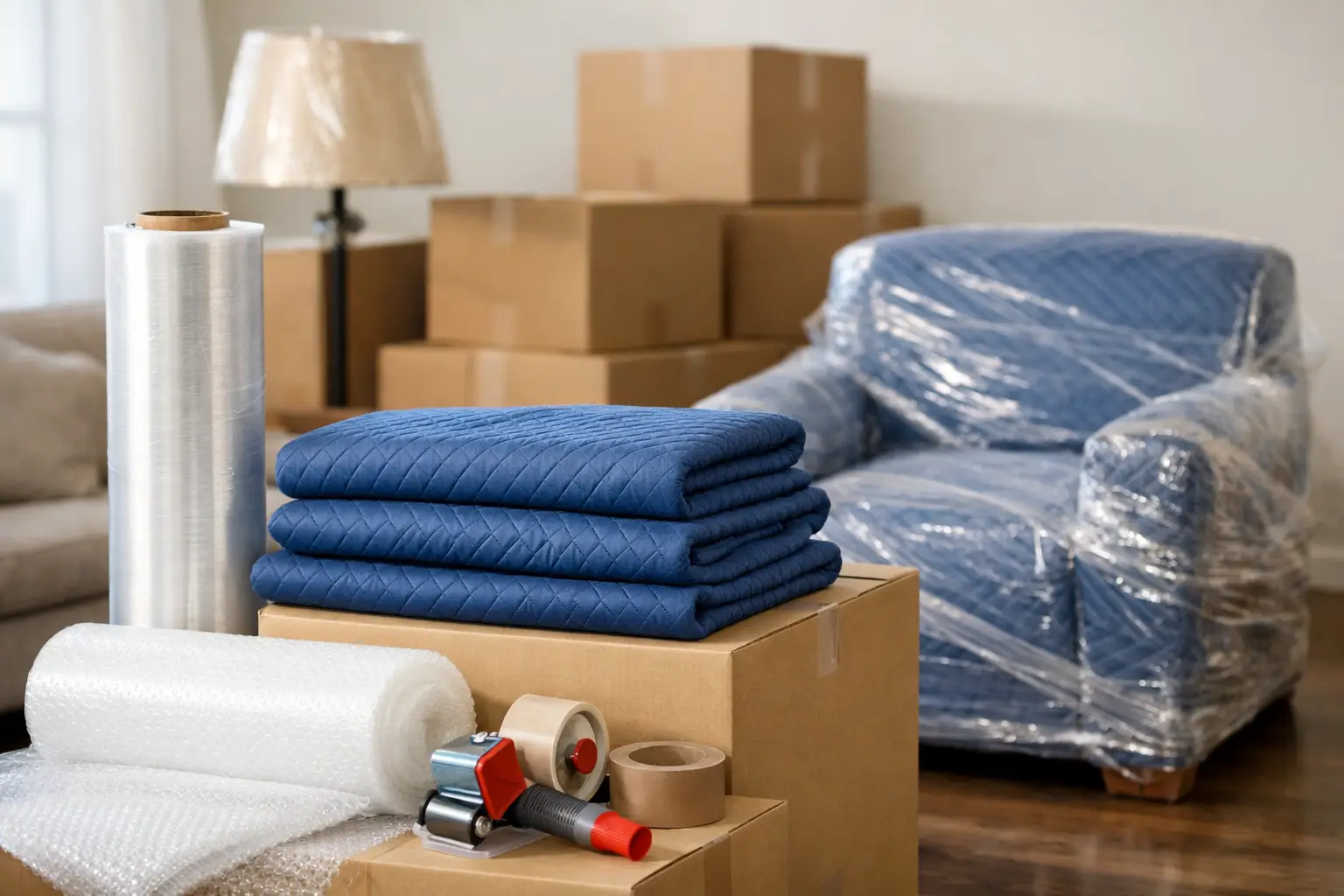
A scratched dining table, a torn sofa corner or a chipped TV unit can turn moving day into an expensive problem. This furniture wrapping materials review looks at what genuinely protects household items in transit, what each material is best used for, and where people often waste time or money. The right approach is rarely one material for everything. It is the right combination, applied properly.
Furniture wrapping materials review: what works
Furniture moves for more reasons than one. Items can rub against each other in the truck, knock against door frames, shift while being carried, or collect dirt and moisture during loading. Good wrapping creates a barrier against those risks without making an item impossible to lift safely.
For most Melbourne house moves, removal blankets are the main line of defence. Shrink wrap, bubble wrap and cardboard then have specific jobs. Using shrink wrap alone around timber furniture, for example, may keep doors and drawers closed but it will not provide enough cushioning against hard impacts. Wrapping a polished table in bubble wrap without a blanket can also leave it vulnerable to pressure marks and tears.
The best packing material depends on the item’s surface, weight, shape and value. It also depends on whether the item will travel only a few suburbs or spend days on an interstate truck.
Removal blankets: best all-round protection
Thick removal blankets, sometimes called moving pads, are the most useful material for furniture. They protect timber, upholstered pieces, appliances and flat-pack items from scuffs, knocks and friction. A blanket creates padding without placing adhesive directly on the furniture surface.
They are particularly effective for dining tables, buffets, wardrobes, desks, washing machines and fridges. For upholstered furniture, blankets stop other items rubbing against fabric or leather during transport. For timber pieces, they reduce the chance of edge damage when furniture passes through narrow hallways, lifts and truck doors.
The trade-off is bulk. Blankets add weight and can slip if they are not secured. They should be held in place with stretch wrap, tape applied only to the blanket, or purpose-made straps. Do not tape directly onto polished timber, veneer, painted finishes or leather. The adhesive can lift coatings or leave residue that is harder to remove than the mark you were trying to prevent.
Stretch wrap: useful, but not cushioning
Stretch wrap is the clear plastic film used to secure drawers, doors, cushions and protective blankets. It is fast to apply and useful for keeping loose parts together. On a sofa, it can hold a removal blanket in place. On a chest of drawers, it can stop drawers opening while the item is carried.
Its limitation is simple: stretch wrap is not impact protection. It is thin and should not be relied on to protect furniture from truck movement. It can also trap moisture. Avoid wrapping damp furniture or using plastic as the only layer over timber in humid or wet conditions, especially for longer storage periods.
Use stretch wrap sparingly on leather and delicate finishes. It is better over a blanket or a clean cloth layer than directly against sensitive surfaces. For fabric lounges, a light layer can help keep dust off, but a proper sofa cover is often a cleaner option for longer moves.
Bubble wrap: best for vulnerable details
Bubble wrap earns its place when protecting fragile corners, glass, mirrors, handles, decorative legs and removable components. Large-bubble wrap offers more cushioning for bulky items, while smaller bubbles suit delicate pieces and compact hardware.
It is not efficient for wrapping an entire wardrobe or couch. Doing so uses a large amount of material, takes time and still does not secure the load as well as a blanket. Instead, use it where the furniture has a high-risk point: glass cabinet doors, carved timber trim, marble tops, removable shelves or exposed metal corners.
For glass tabletops and mirrors, bubble wrap should be paired with rigid cardboard. The cardboard spreads pressure across the surface, while the bubble wrap softens shocks. Secure the package firmly, mark it clearly, and keep it upright in the truck where possible. Never stack heavy furniture on top of glass, no matter how well it is wrapped.
Cardboard corners and sheets: low-cost protection
Cardboard is one of the most practical and affordable materials in a move. Flattened cartons or purpose-cut sheets shield table tops, cabinet faces and appliance sides from scratches. Corner protectors are especially valuable for desks, bedheads, drawers and timber frames, where a single sharp knock can cause visible damage.
Cardboard works best as a rigid outer layer over blanket or bubble wrap protection. For example, a glass coffee table can be wrapped in bubble wrap, covered with cardboard sheets and then secured with stretch wrap. This makes the piece easier to handle without putting tape straight on the glass.
Avoid using thin, soft or wet cardboard. It offers little protection and can collapse under pressure. If you are reusing boxes, check they are dry, clean and free from staples or sharp tears before placing them against furniture.
Match the wrap to the furniture
A one-size-fits-all packing method usually creates either unnecessary waste or unnecessary damage. Sofas need clean covers or blankets, secured gently so fabric and leather are protected. Dining tables need corners protected and tops covered, with legs removed where practical. If legs cannot be removed, wrap each one and keep the table upright if its design allows it.
For wardrobes and chest of drawers, emptying drawers reduces weight and makes lifting safer. Stretch wrap can then keep drawers shut, while blankets protect the outer finish. Small removable shelves, handles and fittings should be packed together, labelled and placed in a clearly marked box rather than left loose inside the furniture.
Mattresses need a proper mattress bag or cover. Blankets can protect them briefly, but they are not ideal against dust, rain or dirty loading areas. Fridges and washing machines need blankets for exterior protection, but they must also be prepared correctly before transport. Empty, clean and dry them first. Washing machine transit bolts should be fitted where required.
Antique, high-gloss, stone and sentimental pieces deserve extra care. Soft cloth or acid-free paper can be placed against delicate surfaces before blankets are added. This extra layer helps prevent texture transfer, moisture issues or fine abrasions. For very heavy or unusually shaped items, professional handling is often the safer and more cost-effective choice than trying to over-wrap them at home.
Materials that can cause problems
Household items are tempting substitutes, but they do not always travel well. Doonas and towels are useful as an extra soft layer, particularly around small fragile items, but they shift easily and do not protect sharp edges. Newspaper can transfer ink to light-coloured upholstery and unfinished timber. Old plastic bags tear quickly and may trap moisture.
Packing tape is another common issue. It is excellent for closing boxes but should not be stuck to furniture. The same applies to masking tape. Even low-tack tape can leave marks when it stays on a surface for several hours in heat or direct sunlight.
Blankets that have been stored in a shed, garage or ute tray should also be checked before use. Dirt, grit and moisture trapped in a blanket can scratch or stain the very item it is meant to protect. Clean, dry materials matter as much as the material type.
A practical wrapping order
Start by dismantling furniture that is designed to come apart. Remove table legs, bed frames, shelves and fragile inserts when this makes the item easier to carry. Keep screws and fittings in labelled bags, then tape the bag to a protected internal surface or place it in an essentials box.
Next, protect delicate areas with bubble wrap or cardboard corners. Cover the main body with a removal blanket, then secure the blanket with stretch wrap or tape around the blanket only. Check that drawers, doors and moving parts cannot swing open. Finally, plan how the item will be carried and loaded. A well-wrapped piece can still be damaged if it is wedged under heavy boxes or dragged across a rough surface.
For a full household move, buying every material can become costly and leave you with piles of plastic afterwards. Hiring or using professional-grade blankets through your removal service is often better value, particularly for large furniture. It also reduces the risk of loading a truck with poorly protected items.
Protect the furniture, then protect the move
Wrapping materials are worth the effort, but they are only one part of a safe relocation. Good lifting technique, clear access, correct truck loading and secure tie-downs make the protection work. If you are moving valuable furniture, awkward items or a complete household, Blaze Removals can supply the handling and packing support needed to keep the job controlled from door to door.
Before moving day, inspect your furniture, photograph existing marks and set aside the pieces that need extra protection. That small amount of planning gives every blanket, wrap and cardboard sheet a clear purpose – and gives your belongings a much better chance of arriving in the same condition they left.