

A piano can weigh anywhere from a couple of hundred kilos to well over 400 kilograms, but the real problem is not just the weight. It is the shape, the balance, the delicate internal parts, and the fact that one wrong angle can damage the instrument, the property, or the people lifting it. If you are working out how to move a piano, the safest answer depends on the piano type, the access at both ends, and whether you have the right equipment and trained hands.
For many households, this is not a standard furniture move. A fridge is heavy but predictable. A sofa is awkward but forgiving. A piano is different. It carries most of its weight unevenly, has fragile legs and pedals, and can be thrown out of alignment by rough handling. That is why rushed DIY moves often end with chipped timber, damaged stairs, strained backs, or a tuning bill that could have been avoided.
How to move a piano safely starts with the piano type
Before anyone lifts a thing, identify what you are moving. An upright piano is usually the most manageable option, but that does not mean easy. Even compact uprights are dense and top-heavy. A baby grand or grand piano is a different job again because the shape, leg structure, and centre of gravity make it much more technical.
The piano type affects everything – how many people are needed, what equipment is required, whether doors need to come off hinges, and how the item should be secured in the truck. It also affects the risk level. An upright might be moved short distance on one level with proper gear and enough experienced handlers. A grand piano almost always needs specialist disassembly and controlled handling.
If the move includes stairs, narrow hallways, lifts, steep driveways, or polished floors, the risk jumps quickly. That is the point where trying to save money can cost more than a professional move.
What makes piano moving high risk
People often assume the main danger is dropping the piano. That is only part of it. The more common problems happen in small moments – tipping too far on a trolley, catching a leg on a door frame, loading without proper tie-down points, or pushing across a floor without protection.
A piano can also be damaged internally even when the outside looks fine. Sudden jolts can affect the action, strings, pedals, or cabinet alignment. Then there is the property itself. One slip on timber stairs or tiled entryways can leave expensive damage behind.
There is also a personal safety issue. A piano is not the sort of item you recover once it starts moving the wrong way. If the lift goes bad, strength alone usually does not fix it. Training, timing, and equipment matter more than muscle.
The equipment you need before you attempt it
If you are serious about learning how to move a piano yourself, the minimum setup matters. This is not a job for an old blanket and a borrowed trolley from the shed.
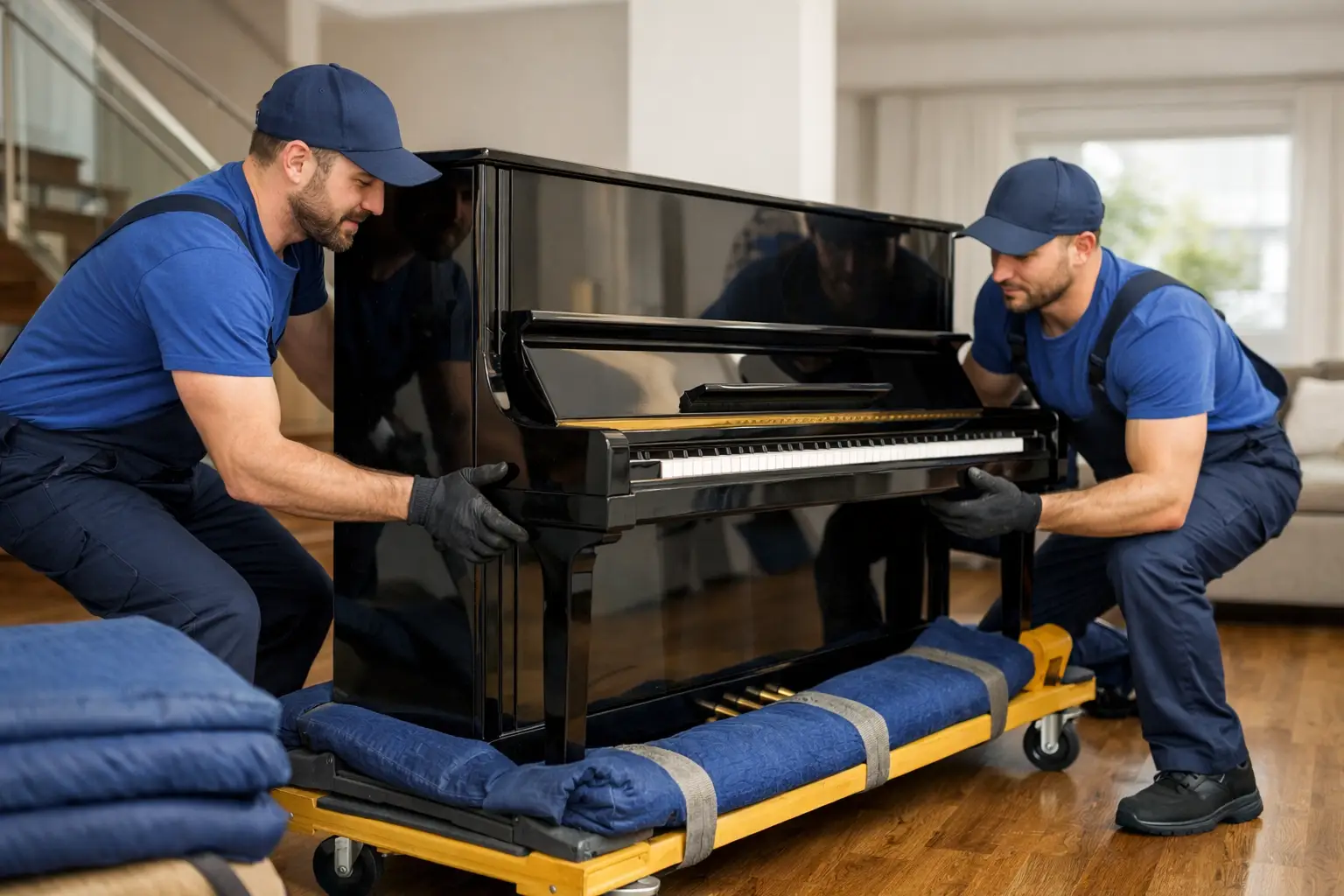
You need heavy-duty moving straps, thick moving blankets, floor protection, a proper piano trolley or dolly rated for the load, tie-downs for transport, and a suitable truck with secure anchoring points. For grand pianos, you may also need tools to remove legs and pedals safely, plus protective wrapping that prevents movement in transit.
Just as important is the vehicle. A standard trailer or ute is usually a poor choice because loading angles can be too steep and securing the instrument properly is harder. Enclosed trucks give better control, better protection from weather, and safer tie-down options.
If you do not already have this equipment, hiring it all for one move often narrows the price gap between DIY and using trained movers.
How to prepare a piano for moving
Preparation is where a lot of avoidable damage gets prevented. Start by measuring everything – the piano, doorways, hallways, stairwells, lift dimensions, and truck access. Guesswork is how corners get clipped and moves stall halfway through.
Close and lock the keyboard lid if the design allows it. If it does not lock, secure it gently so it cannot fly open during lifting. Wrap the piano in moving blankets and protect corners properly, especially on uprights where side panels and edges take most of the knocks.
Remove anything loose in the path. Rugs, small furniture, toys, pot plants, and cords should all be cleared before the first lift. If floors are delicate, lay down floor runners or protective boards. It is much easier to protect timber and tiles in advance than repair them later.
For grand pianos, preparation is more involved. The lid may need to be secured, legs removed in the correct sequence, and the body positioned on a piano skid or board for safe transport. This is one reason grand piano moves are usually best left to specialists.
Lifting and moving: where DIY goes wrong
The biggest mistake is trying to carry the piano by its legs, handles, or decorative sections. Those parts are not built to take shifting weight under load. The piano needs to be supported from strong structural points and controlled as one unit.
The second mistake is poor coordination. Everyone lifting must know the route, the commands, and where the piano is being set down. Mid-move confusion causes sudden weight shifts, which is when injuries and damage happen.
The third mistake is underestimating slopes and stairs. Even a few front steps can turn a manageable move into a dangerous one. Going down is not easier than going up. Gravity does not help you control the load – it works against you.
If any part of the move requires pivoting in tight spaces, navigating stairs, or loading from an awkward angle, stop and reassess. That is usually the line between a possible DIY move and a move that needs professionals.
Transporting a piano without damage
Once the piano is in the truck, the job is only half done. It must be placed in a stable position and secured so it cannot shift, tip, or absorb road vibration more than necessary.
An upright piano is generally transported upright, not on its back, unless a specialist handling method says otherwise for that particular model. A grand piano, once disassembled and protected correctly, needs secure placement that prevents movement in every direction.
Blankets alone are not enough. Tie-downs need to hold the piano firmly without crushing delicate parts. The truck should be loaded so the piano is not taking impact from other furniture or boxes. A cheap move often becomes an expensive one when a heavy item slides into the side of the piano on a roundabout.
Weather also matters. Rain, heat, and humidity can affect piano finishes and internal components. If the move is happening during wet Melbourne weather, enclosed transport is the better option.
When to hire professionals instead
If your piano is valuable, sentimental, oversized, or hard to access, professional handling is the smart call. The same goes for apartment moves, stairs, long-distance transport, and any job involving a grand piano.
A trained removal team brings more than labour. They bring the right trolley, protective materials, loading technique, insurance cover, and the judgment to know when a path is too risky. That matters because piano moving is less about brute force and more about controlled handling.
For households in Melbourne, this is often the most practical option. A specialist team can usually complete the move faster, with less disruption and far less chance of damage. Blaze Removals handles piano moves as part of a broader speciality-item service, which means the planning, packing support, transport, and property protection are treated as part of one job rather than an afterthought.
After the move: what to do next
Even a well-moved piano may need time to settle before tuning. Changes in temperature, humidity, and position can affect the instrument. Most owners should wait a short period before booking a tuner, especially after a longer move.
Check the exterior for any marks, inspect the pedals, and test the keys gently. If anything feels uneven or loose, arrange a professional inspection rather than forcing use. It is better to catch a small issue early than make it worse.
Also think about placement. Do not put the piano hard against a damp wall, in direct sun, or right next to heating and cooling sources. The move is finished when the instrument is stable, protected, and positioned to last.
The safest way to move a piano is the one that matches the risks in front of you, not the one that looks cheapest on paper. If the job is simple, level, and properly equipped, a careful DIY move might be possible. If there is real weight, awkward access, stairs, or value at stake, getting trained movers involved is usually the better decision for your piano, your home, and your back.