



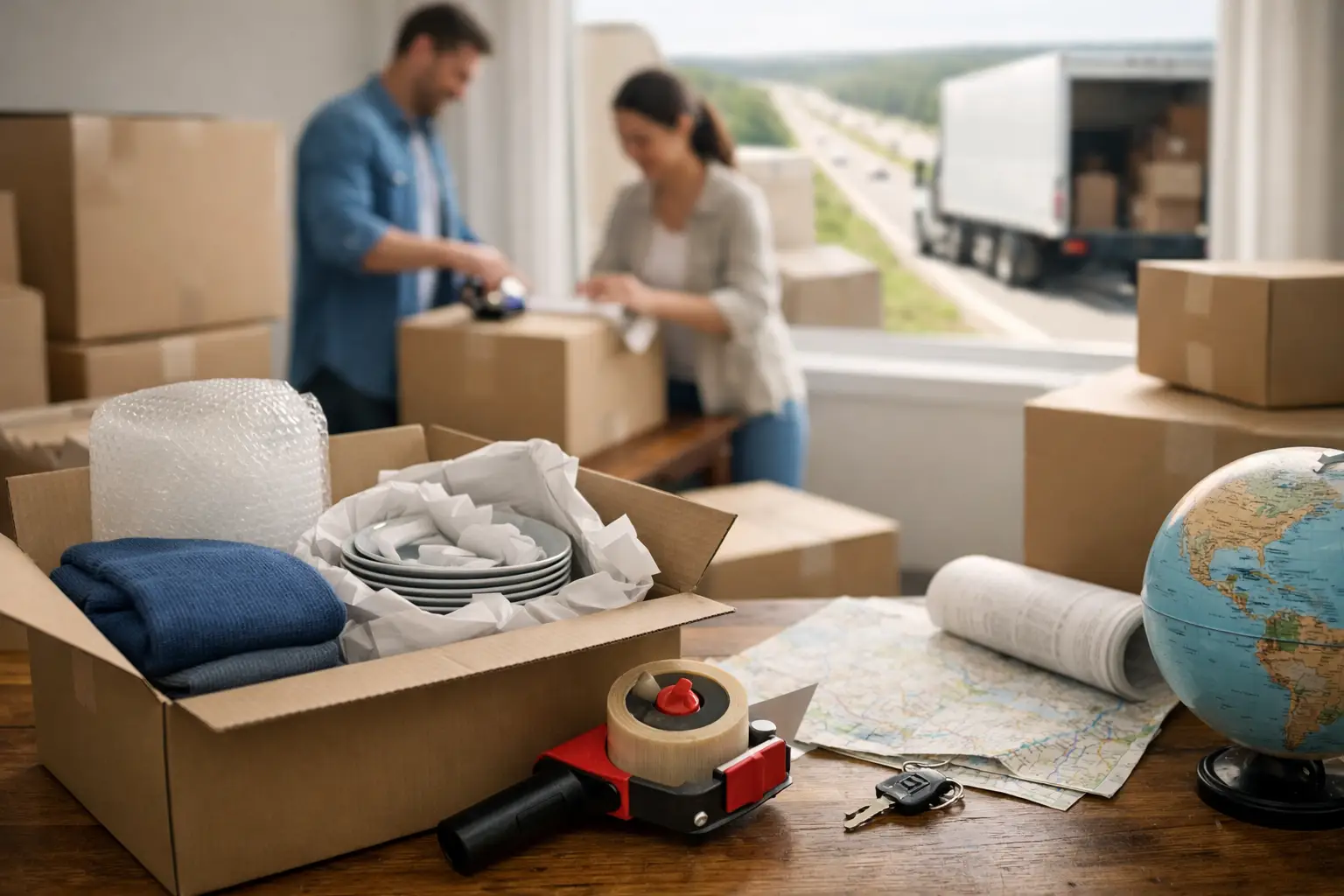
An interstate move is not the time for random boxes, vague labels and a last-minute run to buy tape. A solid packing guide for interstate moves protects your belongings through a longer journey, keeps loading efficient and makes the first night in your new home far less chaotic.
The goal is simple: pack less, label better and keep the items you need close. Long-distance removals involve more handling than a short local move, so every carton needs to be secure enough to be lifted, stacked and transported without damage.
Start packing before the removal date is close
Begin with the rooms and items you use least. Spare bedrooms, storage cupboards, bookshelves, seasonal clothing and decorative pieces can usually be packed several weeks before moving day. Leave everyday essentials until the final few days so your household can keep functioning normally.
Before you buy cartons, sort what is actually coming with you. Interstate moving costs and truck space are affected by volume, so there is little value in paying to transport broken furniture, duplicate kitchenware or clothes nobody wears. Sell, donate, recycle or dispose of what you no longer need before packing starts.
This is also the right time to confirm access at both properties. Note stairs, lifts, loading zones, tight driveways and any building booking requirements. These details affect the removal plan and help avoid delays on the day.
Get the right packing materials
Used boxes can be fine for light, dry items if they are clean and structurally sound. For books, kitchenware, electronics and anything valuable, quality moving cartons are the safer option. A carton that collapses under weight can damage more than the contents inside it.
Have these supplies ready before you begin:
- Strong moving cartons in a few practical sizes
- Heavy-duty packing tape and a tape dispenser
- Butcher’s paper or packing paper for wrapping fragile items
- Bubble wrap for delicate or high-value pieces
- Permanent markers and clear labels
- Mattress protectors, furniture blankets and stretch wrap
Avoid overfilling large cartons. Books, tools, records and pantry items become very heavy very quickly, so pack them in smaller boxes. Larger cartons are better for linen, cushions, toys and lightweight clothing. If you cannot lift a box safely, it is too heavy.
Use a room-by-room system
Packing one room at a time keeps the job controlled. Finish each box, seal it and move it to one designated area before starting the next. Mixing items from the kitchen, bedrooms and study into the same carton may seem efficient in the moment, but it slows unpacking and makes essential items harder to find.
Label every carton on at least two sides. Write the destination room, a short description of the contents and a handling instruction where needed. “Kitchen – glasses – fragile” is useful. “Miscellaneous” is not.
For larger moves, number each carton and keep a basic inventory on your mobile or in a notebook. You do not need a complicated spreadsheet. A simple record such as “Box 18: main bedroom, winter clothes and bedside lamp” gives you a clear reference if you need to locate something before everything is unpacked.
Pack fragile items for movement, not storage
Glassware, ceramics and framed artwork need protection from impact and vibration. Wrap each item individually with packing paper, fill empty spaces in the carton and keep the box firm without forcing the lid shut. Empty gaps allow items to shift. Overpacked cartons place pressure on the contents.
Pack plates vertically rather than flat, using paper between each one. Put heavier pieces at the bottom and lighter pieces on top. Mark fragile cartons clearly, but do not rely on a label alone. Correct wrapping and tight packing provide the real protection.
For televisions, monitors and other electronics, original packaging is ideal if you still have it. Otherwise, use a suitable carton with padding on all sides. Take a photo of cable connections before disconnecting them, and keep remotes, screws and small accessories in labelled bags taped to the relevant item or stored in your essentials box.
Protect furniture and keep hardware together
Dismantling furniture can make loading safer and reduce the risk of damage, particularly for bed frames, dining tables and modular shelving. Keep every bolt, screw and bracket in a sealed, labelled bag. Write the furniture name on the bag, then tape it securely to the item where practical.
Wrap timber furniture, mirrors and upholstered pieces before transport. Drawers should be emptied unless they only contain light, non-breakable items and the furniture is designed to travel with them in place. Heavy drawers can damage runners and make items unsafe to carry.
If you have a piano, pool table, oversized artwork, a large safe or other specialty item, arrange professional handling early. These items need the right equipment, trained lifting techniques and a clear access plan. They should never be treated as an ordinary box-and-van job.
Build an essentials kit for the first 24 hours
Your interstate truck may arrive on a different schedule from your own travel, or you may be too tired to unpack properly on the first night. Pack an essentials kit that stays with you, not in the removal truck.
Include identification, medications, chargers, keys, important documents, a change of clothes, toiletries, basic cleaning supplies, towels, bedding, pet supplies and snacks. Families should add familiar toys, school items and anything children need for bedtime. If you are moving with a baby, keep nappies, formula and spare clothes readily available.
It also helps to keep a small tool kit, scissors, a marker, toilet paper and a kettle or coffee supplies close by. These are minor items until you arrive in an empty house and need them immediately.
Know what should not go in the truck
Removal trucks are not the place for dangerous goods or irreplaceable personal items. Fuel, gas bottles, flammable liquids, fireworks, chemicals and some batteries may have transport restrictions. Check requirements before packing, especially if you have workshop supplies, gardening chemicals or camping equipment.
Take passports, financial records, jewellery, cash, prescription medicines and sentimental valuables with you wherever possible. If an item has a high financial or personal value, discuss the best handling arrangement before move day rather than placing it in an unmarked carton.
Food needs a separate decision. Dry pantry goods can travel if packed securely, but perishable food is usually best used, given away or transported in your own cooler if the travel time allows. It depends on the distance, weather and delivery schedule. Avoid packing a fridge or freezer without emptying, defrosting and drying it first.
Make packing work with your removal plan
Good packing supports a faster, safer removal. Keep pathways clear, stack sealed cartons in one area and separate items that are not being moved. Let your removalists know about fragile pieces, heavy furniture, access issues and anything requiring dismantling before the truck arrives.
For interstate moves, fixed-price quoting is usually more useful than guessing based on a few boxes and a sofa. An accurate quote depends on the real volume of your belongings, the collection and delivery access, and any extra services such as packing, unpacking or furniture assembly. Be upfront about specialty items and additional pickup locations so there are no avoidable surprises.
Professional packing support can be worthwhile when time is tight, the home is large or you have fragile and high-value belongings. Blaze Removals can help with packing, transport and specialty-item handling, but the best result still starts with a clear inventory and honest information about the move.
Final checks before the truck arrives
Walk through every room, cupboard, garage and shed before loading begins. Check behind doors, under beds, on high shelves and inside appliances. Remove rubbish, separate items staying behind and photograph the condition of valuable furniture if that gives you peace of mind.
Keep your phone charged and your new address, contact details and access instructions handy. At the delivery end, direct cartons to their labelled rooms instead of leaving everything in one pile. That small bit of organisation saves hours when you begin setting up.
Pack with the arrival in mind, not just the departure. When every box has a purpose, every fragile item is protected and your essentials travel with you, the new place starts feeling like home much sooner.