



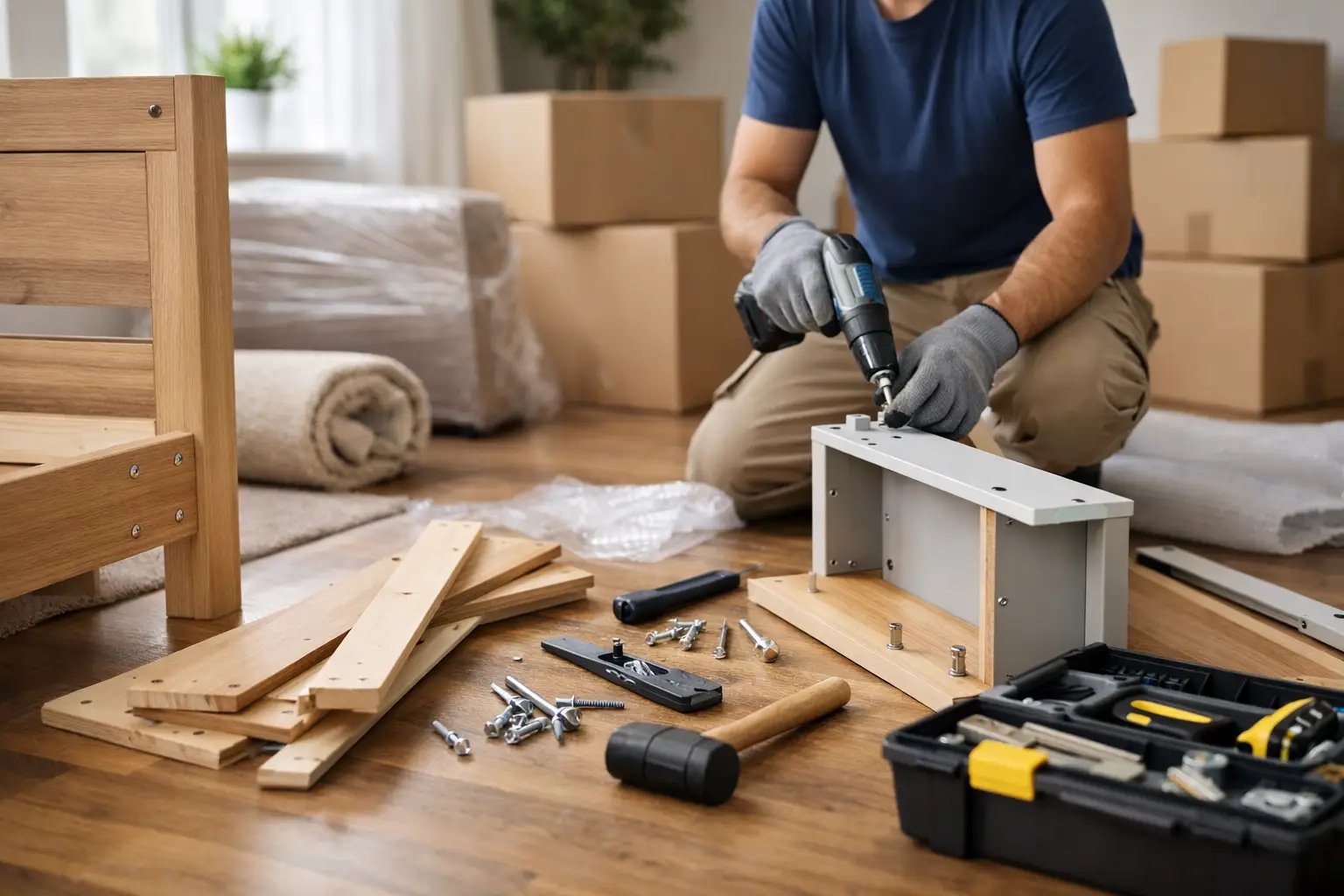
A bed frame that will not clear the bedroom door, a wardrobe too tall for the lift, or a loose glass tabletop can stop a moving day in its tracks. This furniture dismantling before moving guide helps you decide what to take apart, how to pack every component safely, and when it is smarter to leave the job to professional removalists.
Dismantling furniture is not about pulling every item apart. It is about making large, awkward pieces safer to carry, easier to load and less likely to be damaged in transit. Done properly, it also makes better use of space in the truck and reduces the risk of chipped walls, strained backs and missing hardware.
Decide What Furniture Needs Dismantling Before Moving
Start with access, not the size of the item alone. Measure furniture against doorways, hallways, stairwells, lifts and the route from the home to the truck. A compact sofa may fit through a wide doorway without issue, while a tall bookcase can become difficult around a tight landing.
Most bed frames, modular sofas, dining tables, wardrobes, desks and shelving units benefit from partial dismantling. Remove table legs where practical, separate bed heads and bases, take drawers out of cabinets, and disconnect shelves that can shift during transport. Flat-pack furniture deserves extra care. It can be easy to dismantle but may not tolerate repeated rebuilding, especially if the particleboard joints are worn or the screws have loosened over time.
Some pieces are better moved intact. A solid timber chest of drawers, for example, may be sturdier as one unit once drawers are removed and secured. Antique furniture, glued joints, fragile veneer and pieces with complicated mechanisms should not be forced apart. If a component does not come away easily, stop and inspect it rather than applying more pressure.
The right choice depends on the item, the access at both properties and the condition of the furniture. Saving ten minutes at the old home is not worthwhile if the piece is damaged or unstable at the new one.
Plan Your Furniture Dismantling Before Moving
Give yourself enough time to dismantle furniture before packing day. Rushing the job at midnight before a morning move is how bolts disappear, instructions go missing and panels get scratched. For a typical household, tackle one room at a time over several days, beginning with furniture you do not need every day.
Before touching a screw, photograph the furniture from several angles. Take close-up photos of brackets, hinge positions, cable routes and any unusual joins. These images are often more useful than an assembly booklet when you are standing in a new home surrounded by boxes.
Set up a small hardware system for each item. Use a labelled zip bag or small container for screws, bolts, washers, dowels and Allen keys. Write the item name and room on the label, then tape the bag securely to a protected part of that furniture or place it in one clearly marked hardware box. Never leave loose fittings in drawers, on a benchtop or in the bottom of a moving carton.
Keep the original assembly instructions if you have them. If not, your photos and a quick note on the order of disassembly will do the job. Write down details such as “remove centre support before side rails” or “long bolts belong on headboard”. That small step prevents a frustrating guessing game later.
Use the Right Tools and Protection
A basic kit will cover most household furniture: screwdrivers, an Allen key set, adjustable spanner, socket set, pliers, a cordless drill with the correct bits, masking tape, a marker and zip bags. Keep a small utility knife handy for tape and wrapping, but do not use it near upholstery, timber finishes or glass.
Protection matters as much as tools. Use moving blankets or clean padded covers for timber, glass and painted surfaces. Bubble wrap is useful for delicate corners and loose components, while cardboard corner protectors help prevent dents on tabletops and cabinets. Stretch wrap can hold doors, drawers and loose panels in place, but do not wrap bare timber tightly for long periods in warm conditions, as trapped moisture can affect the finish.
Masking tape is suitable for marking parts, but avoid sticking it directly to polished timber, veneer or delicate painted surfaces. Label the protective wrap instead. For glass tops and mirrors, place a visible warning on both sides and keep them upright during transport.
A Safe Order for Taking Furniture Apart
Empty the furniture first. Drawers, shelves and hidden compartments often hold more weight than expected. Remove books, crockery, cables and personal items before lifting or dismantling anything. For drawers, take them out where possible and pack the contents separately. Empty drawers make a cabinet lighter and stop internal runners from being damaged.
Work from the removable parts inward. Take off cushions, shelves, legs, handles and detachable doors before separating the main frame. Keep matching components together, such as left and right bed rails or the two halves of a dining table base. Where parts look nearly identical, label them clearly with low-tack tape on the wrapped surface.
For bed frames, remove the mattress and bedding, then take out slats, centre supports and side rails before handling the headboard and footboard. Bundle slats together with padding between them, and keep them dry. A mattress should be placed in a protective cover and carried upright where access allows.
For tables, remove leaves and glass tops first. Unscrew legs only if the table is designed for it or access requires it. Pack legs together, protecting exposed bolts and sharp fittings. Do not place heavy cartons on top of a wrapped tabletop, even if it looks solid.
For wardrobes and cabinets, remove shelves, hanging rails and drawers. Doors may need to come off if they can swing open or add width through a doorway. If you remove hinges, bag and label them by door position. Flat-pack wardrobes can lose strength once dismantled, so keep panels supported and avoid stacking heavy items on them.
Pack Parts So They Arrive Ready to Reassemble
A furniture item can be dismantled perfectly and still be damaged by poor packing. Every panel needs protection from abrasion, pressure and movement in the truck. Wrap finished surfaces individually where they touch, then secure the bundle so it cannot slide apart.
Place small fittings in their labelled bags before wrapping the main item. Put the bags in a dedicated essentials carton if taping them to furniture is not practical. This carton should travel with you or be loaded last and unloaded first. It should also contain spare batteries, chargers, keys, assembly instructions and the tools needed for the first night.
Keep long, narrow components together. Bed rails, table legs and shelving supports can be bundled with moving blankets and labelled at both ends. Avoid heavy tape directly over finished surfaces. If a panel has glass, marble or a delicate edge, carry it separately rather than bundling it with heavy timber pieces.
On moving day, tell the removal team which items have loose components, glass or hardware bags. Clear information helps the crew load pieces in a stable order and position them away from items likely to shift. At Blaze Removals, trained teams can handle dismantling and reassembly where it is included in the booked service, giving you one less moving-day task to manage.
When to Book Professional Dismantling
Professional help is worth considering when furniture is oversized, valuable, awkwardly placed or difficult to rebuild. This commonly applies to large modular lounges, heavy dining tables, wall-mounted systems, commercial workstations, pool tables and furniture in apartments with narrow lifts or multiple flights of stairs.
It also makes sense when time is tight. A removal crew can assess access, use suitable protective materials and dismantle items in the order that supports efficient loading. For office moves, this is particularly useful because desks, workstations and storage units must be reassembled in the right locations to get the business operating again quickly.
Be upfront when requesting a quote. List any furniture that may require dismantling, mention stairs or lift access, and advise if the item is especially heavy, fragile or antique. Accurate details allow the right crew, equipment and time to be allocated from the start.
Reassemble Without Turning It Into a Weekend Job
At the new property, assemble essential furniture first: beds, a dining table if needed, and the key items required for work or children’s rooms. Bring the correct hardware bag and photos into the room before unwrapping panels. This prevents screws from being mixed with another item’s fittings.
Do not fully tighten bolts until the frame is aligned. Start each screw by hand to avoid cross-threading, then tighten gradually and evenly once all parts are in place. Check that beds, tables and wardrobes sit level before loading them with weight. Keep packaging on until you are sure each piece is in the correct room and assembled without damage.
A careful dismantling plan turns bulky furniture from a moving-day obstacle into a manageable job. Label as you go, protect every surface and ask for help before a difficult piece becomes an expensive problem.