


A desk may look easy to shift until it catches on a doorway, a monitor is left unsecured, or a filing cabinet is loaded with drawers still full. The right office moving equipment prevents those small oversights from becoming damage, injuries or costly downtime. For businesses relocating in Melbourne, the equipment used matters as much as the truck and the moving crew.
A professional office move is not simply a larger house move. It involves shared workstations, IT hardware, documents, heavy storage, access restrictions and a deadline that cannot move. Good equipment gives the team control at every stage, from packing the first screen to placing the last desk in its new position.
Why office moving equipment matters
Office furniture is designed to stay put. Desks are awkward rather than heavy in a simple way, boardroom tables can be oversized, and compactus units may weigh far more than they appear. Moving these items by hand without suitable aids creates unnecessary risk for staff, movers, floors and walls.
The right gear also protects continuity. When computers, labelled crates and furniture are handled in a planned order, your team can unpack and get back to work faster. That matters whether you are moving a small studio, a retail back office or a multi-room workplace.
Professional equipment does not remove every risk. Building access, lift bookings, parking, stairwells and the condition of each item still affect the plan. It does, however, give experienced movers the safe handling options needed to deal with those conditions properly.
Essential office moving equipment for a controlled relocation
The exact equipment depends on the size of the office, the access at both sites and what needs moving. A ground-floor office with standard desks requires a different setup from a CBD relocation with loading dock time limits and booked lifts.
Furniture dollies and platform trolleys
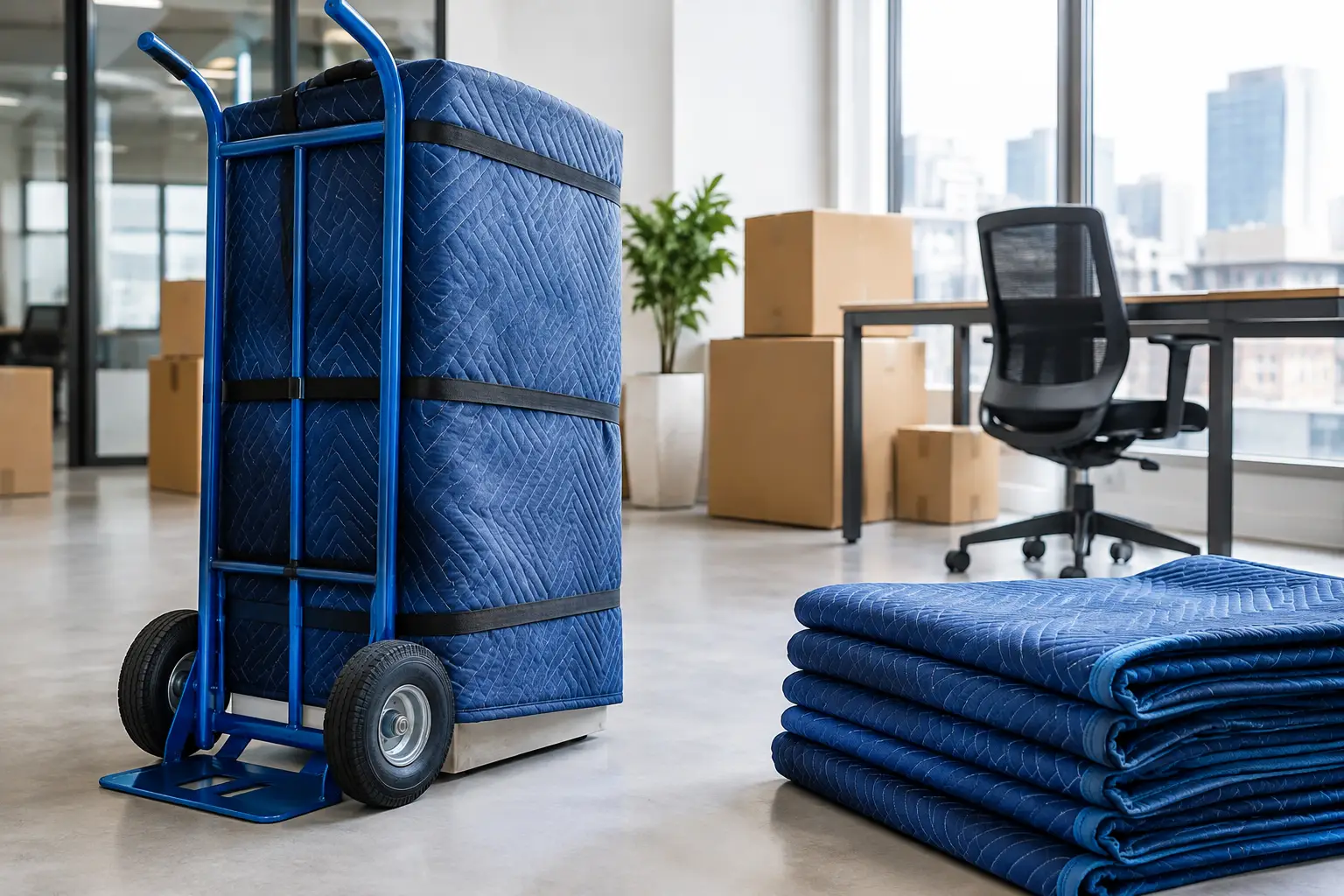
Furniture dollies and flat platform trolleys move heavy desks, cabinets, boxed equipment and grouped chairs with far less manual lifting. They spread weight across a stable base and make it easier to travel along corridors, through lifts and over level loading areas.
They are especially useful for filing cabinets and pedestals. Drawers should be emptied or secured before the cabinet is moved. A trolley is not a substitute for preparation – it is a safer way to transport an item that has already been made stable.
Hand trolleys for boxes and equipment
An upright hand trolley is practical for cartons, archive boxes, printers and small office appliances. It allows movers to stack and secure suitable loads rather than carrying one box at a time.
Not every item belongs on a hand trolley. Fragile monitors, glass panels and unprotected electronics need more considered handling. The goal is not to load as much as possible onto one trolley. It is to move each item securely and efficiently.
Protective blankets, pads and wrap
Removal blankets protect desks, cabinets, boardroom furniture and appliances against scuffs during loading and transport. Furniture pads are particularly useful where polished timber, glass, fabric panels or painted surfaces could rub against other items in the truck.
Stretch wrap helps keep drawers, doors and loose components closed. It can also hold protective padding in place. For office furniture, wrap should be used carefully so that tape does not damage finishes or leave residue on surfaces.
Monitor cartons and computer protection
IT equipment needs more than a general moving box. Purpose-sized monitor cartons, protective sleeves, bubble wrap and sturdy cartons help prevent cracked screens, damaged ports and pressure on fragile components.
Before packing, photograph cable connections or label every lead clearly. Pack power cords and accessories with the correct workstation where possible. This is a simple step, but it saves time when your staff are reconnecting equipment at the new office.
Crates, archive cartons and labels
Reusable moving crates are a practical choice for documents, stationery, desk contents and light equipment. They stack securely, reduce carton waste and are easier to handle than overfilled boxes. Archive cartons are useful for files that need to remain organised and accessible after the move.
Labels are part of the equipment plan, not an afterthought. Each crate should show the staff member or department, destination room and contents category. A colour-coded system can work well for larger offices, provided everyone follows the same system.
Tie-downs and load restraint
Inside the truck, furniture and equipment must be secured. Ratchet straps, tie-downs and load restraints prevent items from shifting during braking, turns and uneven road conditions. Blankets protect surfaces, while restraints hold loads in position. Both are needed.
A poorly loaded truck can cause damage even when every item was packed correctly. Professional movers load heavier items low, protect vulnerable pieces and secure the load progressively rather than filling the truck first and hoping it stays put.
Ramps and lifting equipment
Ramps make it safer to move trolleys and heavy items between ground level and the truck. For unusually heavy storage units, specialised lifting equipment may be required. This is not a job for improvised ramps, office chairs or a few extra people.
If your move includes a safe, large printer, compactus unit or other substantial item, disclose it during the quote process. The moving team can then bring the right equipment and allocate enough people for the task.
Equipment alone is not a moving plan
Buying boxes and borrowing a trolley may help with a small internal reshuffle. For a full relocation, the real value comes from matching equipment to an organised process. That starts with a walkthrough or clear inventory of furniture, IT, access points and timing requirements.
A reliable plan identifies what needs dismantling, what can travel assembled and what must be packed separately. Workstations may need to be dismantled to fit through doorways or protect components. On the other hand, moving certain items assembled may reduce reassembly time, provided they can be handled safely.
The sequence matters too. Files required on day one, reception furniture, network equipment and priority workstations should be loaded and delivered with the setup schedule in mind. Moving everything safely is essential. Moving it in an order that supports reopening is just as important.
Common mistakes that create damage and delays
The most expensive office moving problems often begin before moving day. Overfilled cartons split, unlabelled cables slow down setup, and desks are left full of personal items or loose stationery. These issues are avoidable with basic preparation.
Avoid using wheeled office chairs as transport devices, dragging furniture across carpet or hard flooring, and loading filing cabinets without securing their drawers. Do not place monitors face-to-face without padding, or pack documents in boxes too heavy to lift safely.
It is also risky to assume a building has unrestricted access. Melbourne CBD offices may require lift reservations, loading dock bookings, insurance documentation or approved moving times. Check these requirements early. A crew waiting outside a building is time lost from your move.
When professional movers are the practical choice
A small office with a few desks may be manageable internally if access is easy and the team has enough time. Once the move involves multiple workstations, valuable IT, heavy furniture, stairs, lifts or a strict handover deadline, professional help is usually the more cost-effective option.
Trained removalists bring the vehicle, protective materials, trolleys, ramps, restraints and handling experience as part of a coordinated service. At Blaze Removals, office moves can also include packing support, furniture dismantling and reassembly, helping businesses reduce the number of jobs left for staff to manage.
Before booking, provide an accurate list of furniture and equipment, advise of access limitations and confirm your preferred moving window. Clear information allows the right crew size and office moving equipment to be allocated from the start.
Your business should not have to choose between protecting its assets and keeping the move on schedule. With the right equipment, clear labelling and a capable moving team, your new office can be ready for work without the usual relocation chaos.