


A pool table is not just another heavy piece of furniture. To transport pool tables safely, you need to account for a precision playing surface, extremely heavy slate, delicate rails and legs that are not designed to carry the table while it is moved. One rushed lift or poorly secured trip can leave you with torn felt, chipped slate, damaged flooring or a table that never plays level again.
For most households and businesses, professional pool table removal is the safest and most cost-effective option. The job requires more than muscle. It requires the right dismantling process, protective materials, lifting equipment and a vehicle set up to keep every component stable from pickup to delivery.
Why pool table transport needs specialist handling
A standard pool table can weigh anywhere from a few hundred kilograms to well over a tonne, depending on its size, construction and slate configuration. The visible table is only part of the job. Under the felt sit one, two or three slate sections, which provide the flat playing surface. These slabs are heavy, brittle and difficult to grip safely.
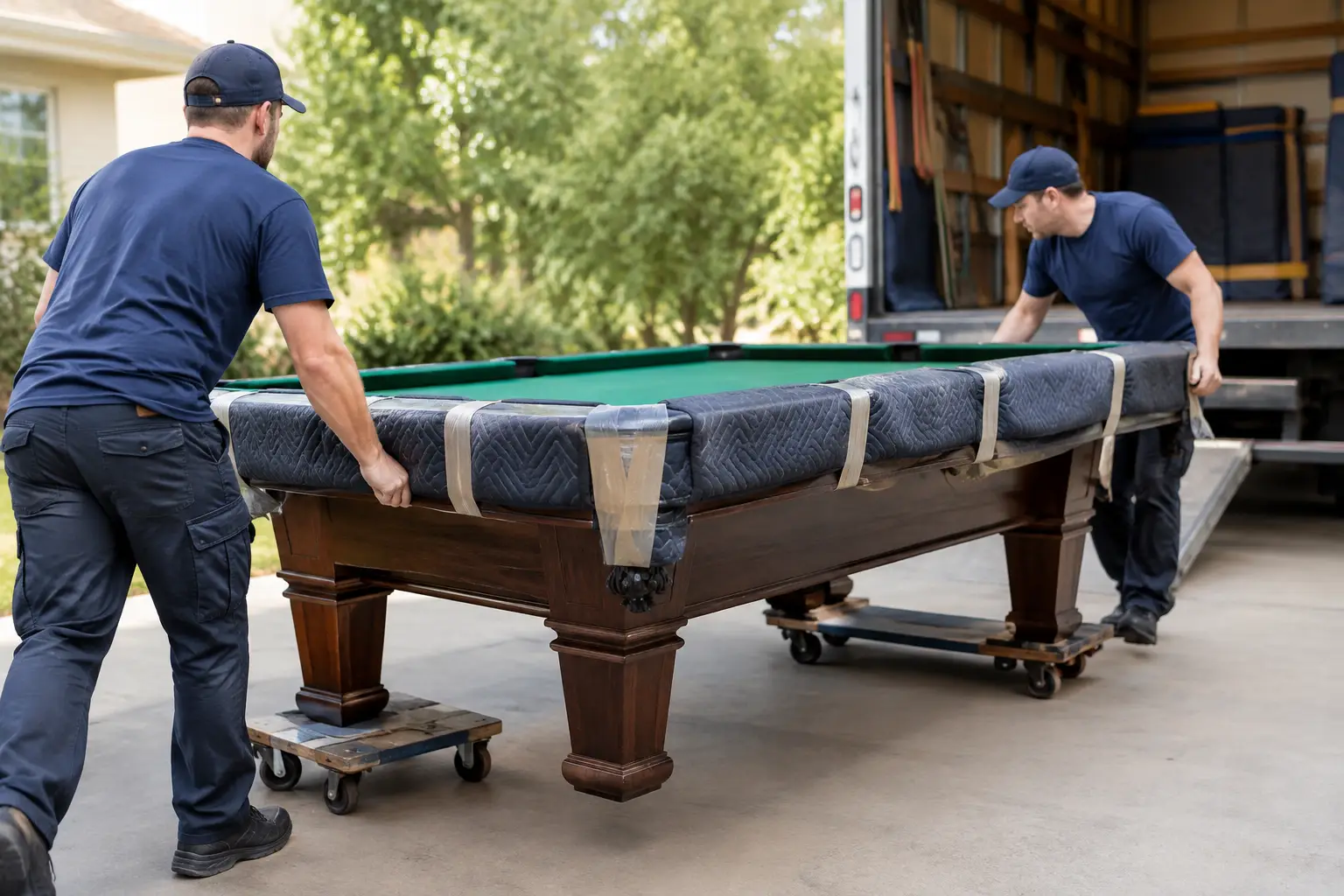
The frame, legs, pockets, rails and cushions must also be handled in the right order. Trying to move a pool table fully assembled puts excessive pressure on the legs and frame. It also makes the table awkward to manoeuvre through doorways, hallways, stairwells and tight corners. Even if it appears to survive the move, the table can become unstable or lose its level.
This is why a pool table should never be treated like a large dining table. It needs to be dismantled, packed, loaded and reassembled with care.
How to transport pool tables safely from start to finish
The process starts well before moving day. Measure the table, access points and destination room. Check doorway widths, stair access, lift dimensions, driveways and parking restrictions. In Melbourne CBD apartments or commercial buildings, booking loading zones and service lifts early can prevent costly delays.
It is also worth confirming where the table will sit in the new property. A level floor and enough clearance for players are essential. Moving a pool table twice because the first location does not work adds unnecessary handling and risk.
Inspect the table before dismantling
Before any parts come off, inspect the table and record its condition. Take clear photos of the felt, rails, pockets, legs and frame. Existing scratches, loose fittings, worn cloth or damaged corners should be identified upfront. This protects everyone from confusion later and helps guide careful handling.
A trained removal team will also assess the table’s design. Some tables have a one-piece slate, while others have three separate slate sections. Some legs detach easily, while others are integrated into a heavier cabinet-style base. The safest method depends on the table in front of you.
Dismantle in the correct order
Proper dismantling usually begins with removing the pockets, rails and cushions. The felt is then carefully lifted or removed as required, exposing the slate underneath. Slate screws and joins are located and removed before the slate is lifted from the frame.
This stage is where many DIY moves go wrong. Felt can stretch or tear if pulled carelessly, and slate can crack if it is twisted, dropped or rested on an uneven edge. The pieces should be labelled and hardware kept in sealed, marked bags so reassembly is organised at the other end.
The base frame and legs are dismantled only once the slate has been removed. This makes the frame far lighter and safer to manoeuvre through the property.
Protect slate, felt and timber separately
Pool table components need different protection. Slate requires firm, padded wrapping that protects corners and faces without allowing the slab to shift. It should be carried upright where appropriate, with the right number of trained handlers and suitable equipment.
Rails and timber sections need padded furniture blankets and secure wrapping to avoid knocks, dents and rubbed finishes. Pockets, bolts, levellers and smaller fittings should be packed together in labelled containers. If felt is being reused, it needs to stay dry, clean and protected from creasing.
Do not place heavy items on top of pool table parts. A slate slab may look indestructible, but a concentrated impact around an edge or corner can cause damage that is expensive, and sometimes impossible, to repair.
Safe lifting is about control, not strength
Heavy lifting injuries often happen when people underestimate an object or try to adjust their grip while already carrying it. Pool table slate is a prime example. It is dense, awkward and has sharp edges that can cause injuries if it slips.
Professional movers use team lifting techniques, trolleys, straps and protective equipment where needed. The route is cleared before lifting starts. Doors are secured open, trip hazards are removed, and the team agrees on commands before moving a heavy component. One person should lead the lift so everyone moves, stops and turns together.
Stairs, uneven paths and wet surfaces require extra caution. In some situations, the safest option is to use specialised access equipment or adjust the removal plan. Saving a few minutes is never worth damaging slate or putting people at risk.
Loading the truck without creating new risks
A pool table can be packed perfectly inside the home and still be damaged in transit if it is loaded poorly. The truck needs sufficient space, clean protective blankets, tie-down points and a stable loading plan.
Slate should be positioned securely so it cannot slide, topple or take the weight of other furniture. The frame, rails and legs should be separated and padded. Nothing should be able to rub, shift or fall during braking and cornering. Heavy components are generally placed low and secured firmly, while fragile smaller pieces are kept away from crushing pressure.
A purpose-equipped removal truck is a better option than squeezing a pool table into a ute, trailer or hired van. Aside from limited space, these vehicles may not have the anchors, ramps or protection needed for safe transport. Poor load restraint can also create a serious road safety issue.
Reassembly and levelling matter as much as the move
Getting the table into its new room is not the finish line. The frame must be rebuilt square and stable before slate is installed. Each slate section needs to sit correctly, with joins prepared and the surface levelled. Rails, pockets and felt are then refitted with care.
Levelling is not a guesswork job. A table that is even slightly out can affect every shot. Floor variation, carpet, timber boards and tile joins can all change the result. Adjustable leg levellers may help, but only when the table has been assembled correctly first.
If the felt is old, stained, stretched or damaged during previous use, moving day can be a sensible time to replace it. It depends on the condition of the cloth and the standard you expect from the finished table. Reusing good felt can keep costs down, while new felt gives the table a cleaner finish after installation.
When professional pool table removal is the smart choice
DIY transport may appear cheaper, but the real cost can quickly rise if slate cracks, felt tears, walls are marked or someone is injured. The risk is higher for slate tables, upstairs properties, narrow access, large tournament-style tables and commercial venues where downtime matters.
Blaze Removals can coordinate pool table removals as part of a house move, office relocation or dedicated specialty-item service. A proper quote should account for the table size, access conditions, dismantling, reassembly, travel and any additional handling requirements. Clear pricing and an agreed scope give you a better idea of what the move involves before work begins.
Before booking, provide photos of the table and access areas, advise whether there are stairs or lifts, and confirm the destination room. Accurate information helps the removal team bring the right people, tools and vehicle capacity for the job.
A pool table is built for years of use, but only if it is moved with the same care that went into setting it up. Plan the access, protect every component and use experienced handlers when the weight and precision leave no room for shortcuts.