


A framed print can look perfectly secure on the wall, then suffer a cracked corner from one sharp bump in the moving truck. The best supplies for packing artwork are designed to prevent exactly that: surface scratches, glass breakage, moisture damage and pressure on delicate frames. The right materials make a real difference, but only when they are matched to the type of art being moved.
Packing artwork is not a job for old newspaper, loose bubble wrap and an oversized carton. Paintings, photographs, canvases, mirrors and framed pieces all need a stable, clean and well-cushioned packing system. Start with the condition and value of the item, then choose protection that prevents movement without placing pressure directly on the artwork.
Best supplies for packing artwork
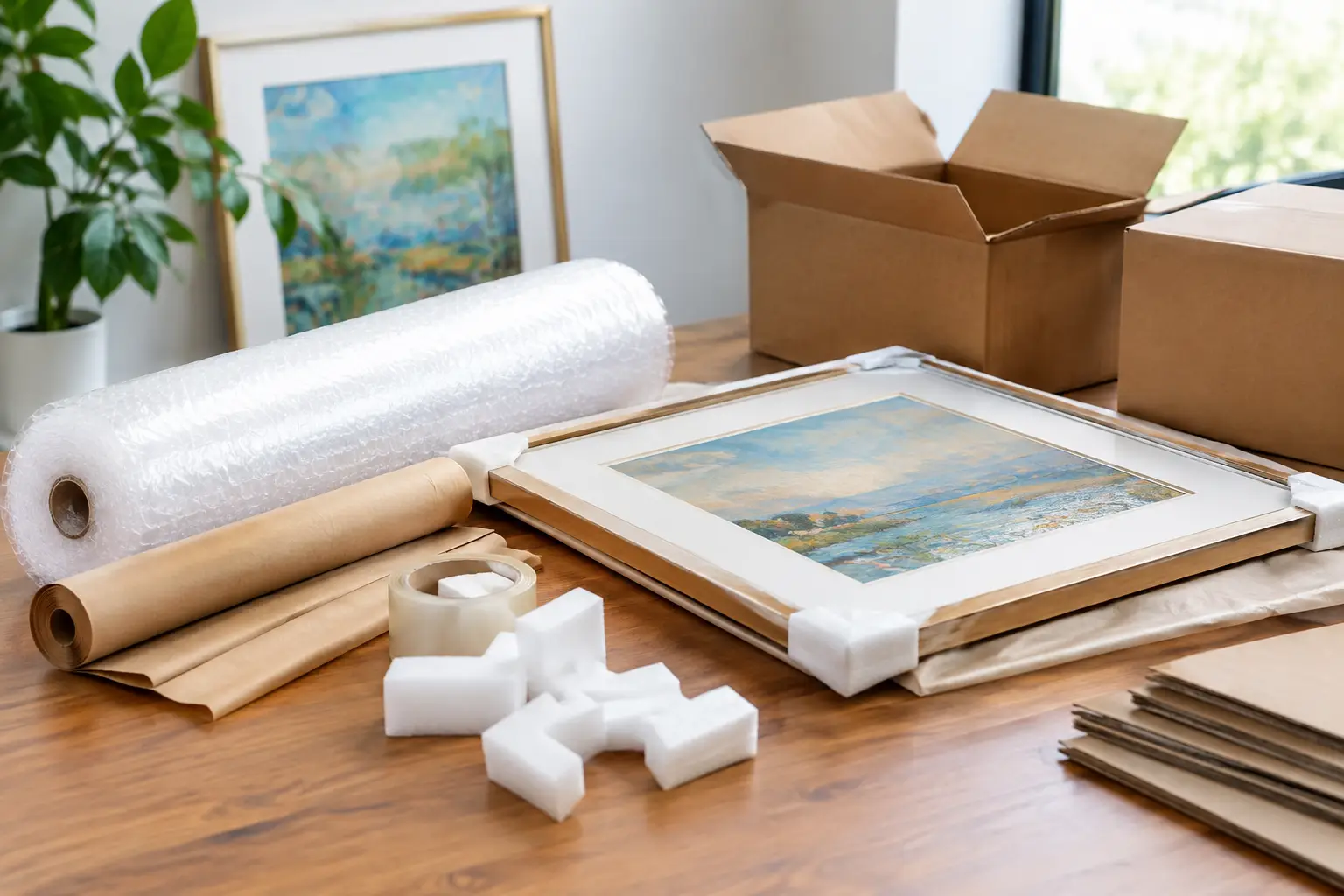
For most household moves, a combination of acid-free tissue paper, glassine paper, corner protectors, bubble wrap, cardboard sheets and purpose-made picture boxes provides reliable protection. You may not need every material for every piece, but cutting corners on the essentials can be expensive.
Acid-free tissue paper and glassine paper
Use acid-free tissue paper for painted surfaces, delicate finishes and unframed works. Standard wrapping paper and newspaper can transfer ink, leave marks or cause long-term staining, particularly on lighter surfaces. Acid-free tissue is clean, soft and suitable for light contact with finished artwork.
Glassine paper is a better choice for photographs, prints, charcoal drawings, pastels and other works with sensitive surfaces. It is smooth, moisture-resistant and less likely to stick to the image. Place a sheet over the face of the work before adding any other packing material.
Do not put bubble wrap directly against an unprotected painting, print or photograph. Changes in temperature and pressure can cause the bubbles or plastic surface to leave an impression, especially if the artwork stays packed for more than a day or two.
Cardboard corner protectors
Corners take the first hit when a framed piece is set down, loaded into a truck or shifted during transport. Cardboard or foam corner protectors are inexpensive and should be used on virtually every framed artwork, mirror and canvas.
Choose protectors that fit firmly without forcing the frame. If the frame is unusually deep, ornate or fragile, build up the protection with folded cardboard rather than squeezing it into a standard corner guard. Secure protectors with painter’s tape or packing tape placed on the protective material, never directly on the frame’s finished surface.
Bubble wrap and foam sheets
Bubble wrap is useful, but it works best as an outer cushioning layer. After covering the face of the artwork with tissue or glassine, wrap the piece in two or three layers of small-bubble wrap. Use larger bubbles for a heavy framed painting or mirror that needs more shock absorption.
Foam sheets are a good alternative for glossy frames, polished metal, timber finishes and pieces that may be affected by plastic rubbing against the surface. They offer less cushioning than bubble wrap, so combine them with rigid cardboard and a correctly sized box.
Avoid wrapping so tightly that the material presses against the glass or canvas. Protection should hold the piece together securely while allowing the frame to remain free from direct strain.
Rigid cardboard sheets and picture boxes
Flat cardboard sheets create a protective sandwich around framed art. They stop the face and back of the piece from being punctured by another item, a trolley edge or a protruding box corner. The cardboard should be slightly larger than the artwork so the edges are protected as well.
Purpose-made picture boxes are one of the safest options for framed artworks. These cartons are narrow, strong and designed to keep pictures upright. For larger pieces, telescope two picture boxes together, then tape the join securely. Add a sheet of cardboard to each side and fill any spare room with clean packing paper so the item cannot slide.
A box that is far too large creates its own risk. The artwork can move, tilt and strike the sides during transport. If you cannot source a suitable picture carton, create a custom carton from double-wall cardboard rather than putting the piece in a general moving box.
Painter’s tape for glass protection
If a framed artwork has glass, apply painter’s tape across the glass in a large X, then add a horizontal and vertical strip through the centre. This does not stop the glass from breaking, but it can help hold shards in place if an impact occurs.
Use low-tack painter’s tape, not strong packing tape. Do not apply it to the frame, and do not use this method on very old, fragile or valuable glass without professional advice. Some antique finishes and aged glazing need specialist handling.
Packing paper, stretch wrap and strong tape
Clean butcher’s paper or packing paper is useful for filling gaps inside cartons and separating cardboard layers. It should not be the first layer against valuable art, but it is effective for preventing movement once the artwork has been protected.
Stretch wrap can keep the outer layers in place and protect against dust or light moisture. Apply it around the wrapped package, not against the artwork itself. Finish with quality packing tape on the carton and label the box clearly on more than one side.
Packing supplies are only half the job
Even the best materials will not protect artwork if it is packed incorrectly. Work on a clean, dry surface and remove rings, watches or anything that could scratch the frame. Photograph each item before packing, especially if it is valuable, insured or being moved as part of a tenancy handover.
For framed art, start with glassine or acid-free tissue over the face. Add corner protectors, then place cardboard sheets over the front and back. Wrap the full package in bubble wrap or foam, secure it lightly, and place it upright in a picture box.
Canvases need a slightly different approach. Never place packing material directly onto a painted canvas, particularly if the paint has texture or has not fully cured. Protect the front with a rigid cardboard spacer that sits against the frame edges, then wrap the entire canvas without allowing anything to rest on the painted face.
Unframed prints, photographs and works on paper should be placed flat between acid-free boards. Keep them dry and avoid rolling them unless the work is specifically suitable for rolling. A rolled print can develop creases, edge damage or permanent curl, especially in humid conditions.
What not to use when packing art
Newspaper is handy for ordinary household items, but it is not suitable for artwork. Ink can transfer, paper can retain moisture, and rough edges can mark a finished surface. Towels, doonas and clothing are also unreliable because they shift, collect dust and provide no protection from punctures.
Avoid using a wardrobe carton, plastic tub or general-purpose moving box for framed art unless it has been reinforced and fitted properly. These containers are often too deep, allowing the item to move around. Never lay heavy boxes on top of a flat-packed painting, even if it appears well padded.
Do not store or transport art against the floor of a truck where it may be exposed to moisture, dirt or pressure from furniture. Artwork should travel upright, secured against a stable surface and separated from heavy items. Mirrors and glass-fronted frames need extra care and should never be used as a gap filler between furniture.
When professional artwork packing is worth it
A standard framed print may be manageable with careful DIY packing. Original paintings, antiques, oversized mirrors, gallery pieces, sentimental family works and expensive framed photographs are different. Their value is not always obvious from the outside, and damage may be difficult or impossible to repair.
Professional packing is worth considering when the item is large, unusually shaped, fragile, high-value or travelling interstate. A trained removal team can use custom protection, safe loading methods and appropriate restraints in the truck. This is particularly useful when artwork is being moved alongside furniture, pianos or bulky office equipment.
For Melbourne moves where several fragile pieces need to travel together, Blaze Removals can assist with packing and specialty-item handling so artwork is not left to chance. Let the team know the size, material and condition of each piece before moving day, including whether it has glass, an ornate frame or special handling requirements.
The practical rule is simple: protect the surface, reinforce the corners, prevent movement and keep artwork upright. Give every piece the same care you would expect from the person carrying it through your new front door.