



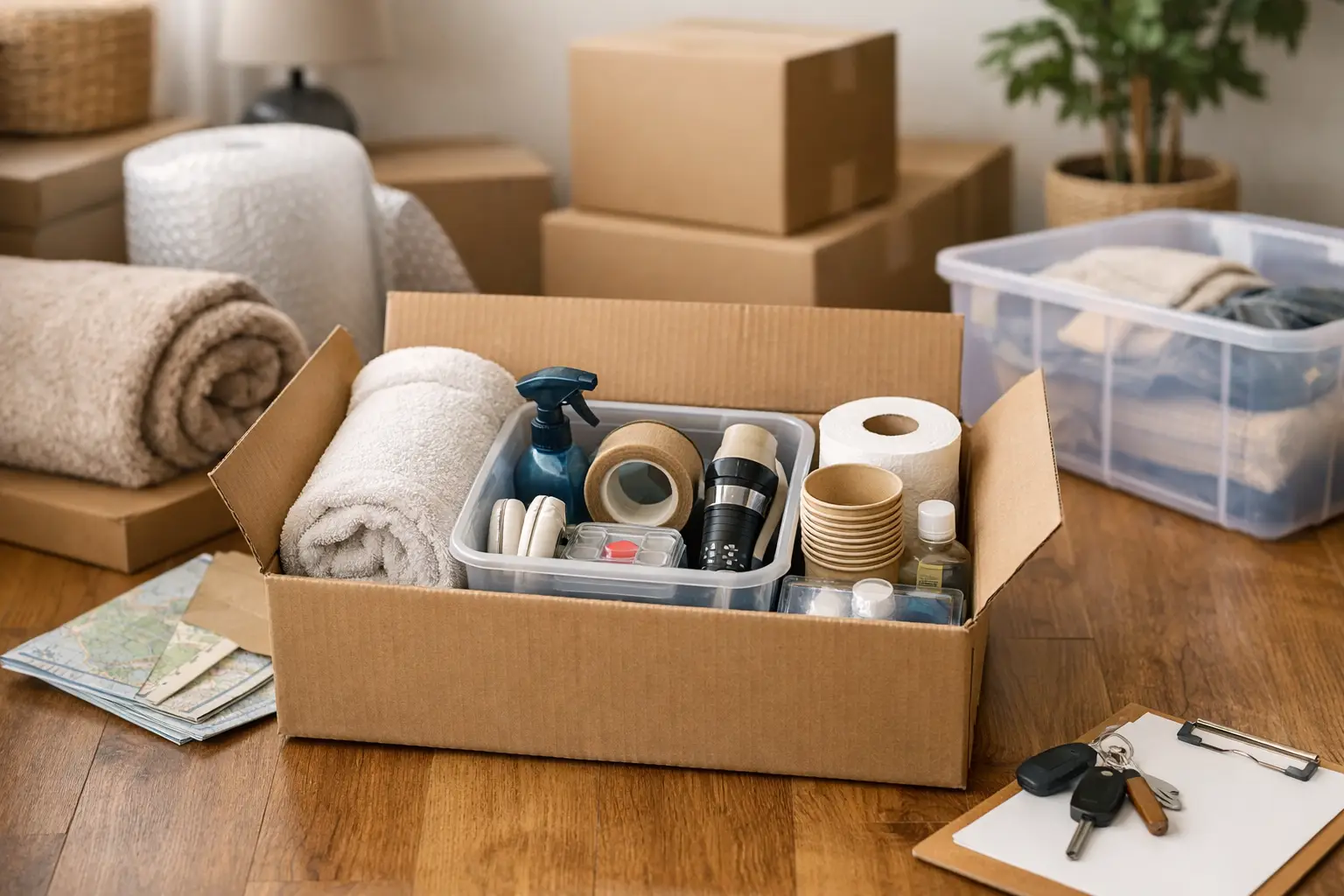
The removal truck may be booked and the keys may be ready, but the first night in a new home can still go badly if the kettle, chargers, medication and clean sheets are buried in box 42. Knowing how to pack moving essentials means separating the things you need immediately from everything that can wait until tomorrow. It is one of the simplest ways to make moving day calmer, safer and far less frustrating.
How to pack moving essentials before anything else
Start your essentials packing before you touch the kitchen cupboards, wardrobes or bookshelf. Your essentials are not the items you own most often. They are the items you will need between your final night in the old property and the first 24 to 72 hours in the new one.
Think about what happens if the removal truck is delayed, settlement runs late, the weather turns, or you are simply too tired to unpack. You still need to eat, sleep, wash, charge your mobile and look after children, pets or anyone with medical needs. Pack for that reality rather than the ideal version of moving day.
Use a suitcase, backpack, plastic tub or clearly marked moving box for these items. A suitcase works well for clothes and toiletries because it is easy to wheel in separately. A sturdy lidded tub is useful for documents, chargers and smaller household essentials. For a family move, it is usually better to create one shared household essentials box and a separate overnight bag for each person.
Keep these bags and boxes with you in your car where possible, not in the back of the removal truck. They should never be mixed in with general cartons. If professional movers are handling the move, point out any essential boxes before loading begins and let the crew know they are not to be stacked under other items.
Build a first-night essentials box
A first-night box should cover the basics without becoming another overpacked carton. The goal is access, not perfection. Pack enough for the first evening, the next morning and any predictable delays.
For most Melbourne household moves, a practical essentials box includes:
- Toilet paper, hand soap, paper towel, rubbish bags and basic cleaning spray
- Kettle, tea or coffee, mugs, water bottles, long-life snacks and simple breakfast food
- Plates, bowls, cups and cutlery for the people moving in, plus a can opener and a small knife
- Phone chargers, power boards, batteries, a torch and a portable power bank
- Basic tools such as a screwdriver, tape measure, utility knife, scissors, hammer and Allen keys
- First-aid supplies, prescription medication, pain relief and any necessary medical equipment
- Clean bedding, towels, pyjamas, a change of clothes and toiletries
- Pet food, bowls, leads, bedding and any comfort items your pet relies on
If you have young children, add nappies, wipes, formula or snacks, favourite toys and a few books. Moving is disruptive for kids, so familiar bedtime items do more than save space. They help the first evening feel settled.
For office moves, the essentials box looks different. Keep critical paperwork, keys, access cards, laptops, chargers, backup drives, internet equipment and the tools needed to reconnect priority workstations separate from general office contents. One labelled crate for “open first” items can prevent hours of downtime.
Pack documents and valuables separately
Some belongings should not travel in a standard moving box at all. Important documents, jewellery, passports, cash, wills, property paperwork, car keys and small sentimental valuables are best transported personally.
Place documents in a waterproof folder or zip pouch, then keep that pouch in your carry bag. Take photos of serial numbers for high-value electronics before the move. This is useful for your own records and can make identification easier if anything needs to be checked later.
If you are moving a valuable item that cannot travel with you, such as a piano, pool table or large artwork, make arrangements early. Specialty items need the right equipment, handling plan and trained team. Trying to solve this on moving morning creates avoidable risk.
Pack essentials by the order you will use them
A common mistake is packing room by room without considering the order you will unpack. A better approach is to create three levels: carry-with-you essentials, first-night essentials and first-week essentials.
Your carry-with-you items include documents, medication, valuables, wallets, keys and phones. These should remain within reach all day. First-night essentials are the kettle, food, linen, toiletries, cleaning items and basic tools. First-week essentials cover the items you need to get the house functional before every carton is unpacked, such as school uniforms, work clothes, cookware, laundry supplies and basic home office equipment.
Label each box on the top and at least one side. Write the room, a short description and a priority marker such as “OPEN FIRST”, “DAY ONE” or “WEEK ONE”. Avoid vague labels like “miscellaneous” or “bedroom stuff”. They slow down both loading and unpacking because nobody knows what is inside.
Colour coding can help on larger moves. Use coloured tape or stickers for each room, then place a matching sign at the new property. Your removalists can put cartons in the correct room from the start, reducing the amount you have to shift later.
Do not overpack the essentials box
The essentials box should be useful to lift, carry and search through. If it weighs too much or contains half the kitchen, it defeats the purpose. Heavy items such as canned food, tools and books can quickly make a carton unsafe to handle.
Use smaller boxes for dense items and keep larger cartons for lighter belongings such as linen, pillows and lampshades. Fill empty spaces with towels, tea towels or packing paper so items do not shift during transport. Tape the base of every carton properly, particularly if it is carrying bottles, cleaning products or pantry items.
Liquids need extra attention. Secure lids with tape, place bottles upright in sealed bags and keep them away from food and electronics. Do not pack hazardous chemicals, gas bottles or flammable items in a standard household move without checking how they should be transported. If you are unsure, ask before moving day rather than taking a chance.
Prepare the new home for a smoother arrival
Packing moving essentials works best when you also plan where they will go. Before the move, confirm access times, lift bookings, parking arrangements and keys for the new property. In inner Melbourne apartments and busy streets, loading zones and lift access can affect how quickly the job is completed.
At the new home, make sure the essentials box is unloaded first. Put bedding straight into the bedrooms, take cleaning supplies to the bathroom and kitchen, and set up the kettle before you start opening general cartons. It sounds small, but a hot drink, working lights and a made bed can change the whole feel of a long moving day.
If utilities are not connected yet, plan for it. Charge devices in advance, keep a power bank handy and have food that does not need refrigeration or cooking. For summer moves, make water easy to reach. For winter moves, keep warm clothing, blankets and a torch close by in case you arrive after dark.
When professional packing support makes sense
Packing yourself gives you full control and can reduce upfront costs. It also takes time, especially when you are balancing work, children, property inspections or a tight settlement date. Professional packing support can be worthwhile when the move involves fragile items, a large family home, an office, or a deadline that leaves no room for last-minute packing.
The trade-off is straightforward: you pay for help, but gain time, proper packing materials and a more organised loading process. For fragile glassware, artwork, electronics and awkward furniture, correct packing can also reduce the risk of damage during transport.
Blaze Removals can assist with packing, unpacking and specialty-item handling as part of a planned move, so you are not left trying to manage every carton alone. Whether you choose help or pack yourself, make the essentials box your first job, not your last.
When the doors close on your old place and the new one is full of boxes, you will not need everything you own. You will need the right things within reach. Pack those first, label them clearly and give yourself permission to unpack the rest tomorrow.